"...the main purpose of criticism...is not to make its readers agree, nice as that is, but to make them, by whatever orthodox or unorthodox method, think." - John Simon

"The great enemy of clear language is insincerity." - George Orwell
Showing posts with label conspiracy. Show all posts

Friday, December 17, 2021

JFK


There’s only one thing everyone can agree on regarding the assassination of American President John F. Kennedy: he was killed on November 22, 1963. Everything else around this watershed event in American history has been subject to intense debate and one that has provoked people to question their own beliefs and those of their government. Yet, for such a highly publicized affair there are still many uncertainties that surround the actual incident. Countless works of fiction and non-fiction have been created concerning the subject, but have done little in aiding our understanding of the assassination and the events surrounding it. Oliver Stone's film JFK (1991) depicts the events leading up to and after the assassination like a densely assembled puzzle complete with jump cuts and multiple perspectives. Stone’s film presents the assassination as a powerful event constructed by its conspirators to create confusion with its contradictory evidence, to then bury this evidence in the Warren Commission Report, which in turn manifests multiple interpretations of key figures like triggerman Lee Harvey Oswald. JFK offers a more structured examination of the conspiracy from one person's point of view where everything fits together to reveal a larger, more frightening picture implicating the most powerful people in the United States government.
 
Stone’s film filters an examination of two conspiracies, one to kill the President and one to cover it up, from one person's point of view — Jim Garrison (Kevin Costner) — the New Orleans District Attorney who then assembles all the evidence at his disposal to deliver a powerful and persuasive case for a conspiracy to kill Kennedy. Stone saw his film consisting of several separate films: Garrison in New Orleans against Clay Shaw (Tommy Lee Jones), a key figure in the assassination, Oswald’s (Gary Oldman) backstory, the recreation of Dealey Plaza, and the deep background in Washington, D.C. JFK is the mother of all paranoid conspiracy thrillers, the ultimate one man against the system film with Garrison taking on the establishment, attempting to uncover one of the most nefarious plots in history. It created such profound shockwaves in the real world that Stone was criticized and vilified in the press.
 
“God, I’m ashamed to be an American today,” says Garrison when he finds out that Kennedy has been shot and we see people in the bar he’s in applaud the man’s death. Stone and cinematographer Robert Richardson desaturate the colors in the 1963 scenes, which creates a somber tone as the country reacts to the Kennedy assassination.

Six years later, the color returns to the film as Garrison shares a plane ride with Senator Russell B. Long (Walter Matthau) who plants the first seeds of doubt in the District Attorney’s mind about the Kennedy assassination. He points out that Oswald was a lousy shot and couldn’t have made all those shots in that time with that kind of accuracy. He also scoffs at the “magic bullet” theory – that one bullet created seven wounds and came out in pristine condition. “I’d round up 100 of the world’s best riflemen. Find out which ones were in Dallas that day. You’ve been duck hunting. I think Oswald is a good old-fashioned decoy.”
 
This encounter provokes Garrison to go through all the volumes of the Warren Commission Report and find that, “Again and again credible testimony ignored, leads are never followed up, its conclusions selective, there’s no index. It’s one of the sloppiest, most disorganized investigations I’ve ever seen.” He concludes that this was by design: “But it’s all broken down and spread around and you read it and the point gets lost.” He continues to dig deeper and the testimony of Lee Bowers (Pruitt Taylor Vince), who hints at another shooter on the grassy knoll, is the final straw.
 
Garrison walks the streets of New Orleans with two of his investigators Lou Ivon (Jay O. Sanders) and Bill Broussard (Michael Rooker), recounting Oswald’s time in the city in a brilliantly written and performed monologue (one of many). He points out to them that Oswald, a supposed communist sympathizer, spent his time in the heart of the government’s intelligence community with the FBI, the CIA, the Secret Service and the Office of Naval Intelligence all within spitting distance of each other. As Garrison tells them, “Isn’t this seem to you a rather strange place for a communist to spend his spare time?” He tells them that they are going to reopen the investigation of the Kennedy assassination and this is where the film really begins to gather narrative momentum.
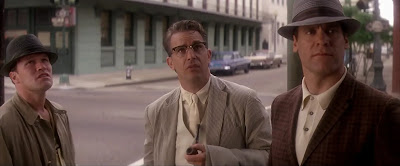
Garrison starts interviewing people that had some link to the conspirators, namely Clay Bertrand a.k.a. Clay Shaw, which gives Stone the opportunity to trot out a parade of name actors such as Jack Lemmon, John Candy and Kevin Bacon to portray a very colorful cavalcade of characters. The interviews paint a vivid picture of David Ferrie (Joe Pesci) and Shaw working with Oswald. Stone uses Bacon and Lemmon to detail the conspiracy on a local level, expounding a ton of expositional dialogue brilliantly, while Candy’s hipster lawyer conveys the danger Garrison faces digging into the murder of the President.

Stone presents a series of lengthy dialogue-driven scenes conveying an incredible amount of information in palatable fashion by having recognizable actors as his mouthpieces while dynamically shooting and editing them. He has a character spout a fact or theory and then cuts to a dramatic reenactment that depicts it in black and white and/or different film stock, often blurring the line between fact and fiction, which is the point. In a case as complex as this it is hard to discern which is which as witness testimony conflicts one another making it difficult to make sense of it all.
 
A great example of this is the sequence where Garrison and his team explain Oswald’s background leading up to the assassination with Stone cutting to staged footage, actual documentary footage and the famous Life magazine cover photograph that cemented Oswald’s guilt in the public’s mind but might be a doctored image. It is a bravura sequence that marries complex editing, pasting together all kinds of different formats, with past events being discussed in the present with many characters talking as the conspiracy deepens and the thriller elements take hold. It culminates with Broussard disbelievingly saying, “We are talking about our government!” to which Garrison replies, “No. We’re talking about a crime, Bill. Plain and simple…We’re through the looking glass, here, people. White is black and black is white.”
 
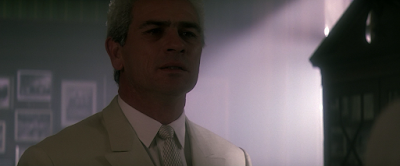
The scene where Garrison first meets Shaw is a fantastic clash between two characters as the former goes after the latter who defiantly deflects and denies any involvement in the assassination plot. During the conversation, Stone intercuts footage that shows he is lying or, at least, that is Garrison’s interpretation. Tommy Lee Jones is brilliant here as he changes tone on a dime, going from amused elegance to angrily indignant and back again all the while maintaining an air of cultured sophistication. Finally, Garrison tires of his act and accuses him of killing Kennedy. When Shaw finally leaves, he gives parting pleasantries but Jones gives Costner a lingering, threatening look. From this point on, the pressure on the D.A. and his team increases as the powers that be attempt to discredit him.

Stone’s portrayal of Garrison is reminiscent of Jimmy Stewart in Mr. Smith Goes to Washington (1939) – the last honest man in government – and he tries to temper this by showing the trouble he faces at home as his wife (Sissy Spacek) complains that he’s never around anymore and that he cares more about the Kennedy assassination than his own family. She is the film’s weakest character whose sole purpose, initially, is to provide strife on the home front. Stone then has her come around to her husband’s way of thinking after he tearfully tells her late one night that Robert Kennedy has been shot and killed. She admits he was right all along and they make love in a scene that is unnecessarily maudlin. These scenes feel shoehorned in and take away from the main thrust of the film. Stone is on more comfortable ground when he returns to more familiar turf as we see the press arriving in droves to Garrison’s office, making it impossible for he and his team to get any work done. Funding for his office has dried up and he is forced to use his own savings to keep the investigation going. We also see infighting among his staff and Ivon and Broussard butt heads as we see the latter scared off the case.
 
Another bit of tour-de-force acting comes from Joe Pesci in the scene where Ferrie rapidly unravels as he fears for his life based on what he knows about the plot to kill Kennedy. Ferrie gets increasingly manic as he rattles off the people and organizations involved, getting worked up until he utters the iconic line, “It’s a mystery wrapped in a riddle inside an enigma!” It’s hyperbolic and over-the-top to be sure but it does illustrate how complex the assassination plot is with fake Oswalds and conflicting eyewitness accounts. After the incredible outburst, Ferrie winds down as Pesci elicits sympathy for this terrible man who is under a lot pressure and is incredibly paranoid. This scene threatens to throw the film right off the rails as Pesci goes for it, acting his ass off, chewing up the scenery in breathtaking fashion.
 
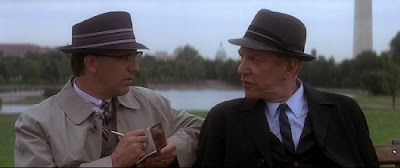
The centerpiece of the film is when Garrison travels to Washington, D.C. to meet with an ex-high-ranking CIA officer known only as Mr. X (Donald Sutherland). In this bravura sequence he lays out the motivation for killing Kennedy including how and why. It’s an incredible amount of dialogue and Stone wisely cast a skilled actor such as Donald Sutherland to convey it in a coherent and engaging way. X lays out the most important aspect of the assassination: why? “The how and who is just scenery for the public. Oswald, Ruby, Cuba, the Mafia – keeps ‘em guessing like some kind of parlor game preventing them from asking the most important question – why? Why was Kennedy killed? Who benefitted? Who has the power to cover it up?”

X posits that Kennedy was killed because he wanted to break up the CIA, make peace with Russia and end the Vietnam War, which not only pissed off a lot of powerful people but would cost a lot of money as he tells Garrison, “The organizing principle of any society, Mr. Garrison, is the war. The authority of the state over its people resides in its war powers.” He encourages Garrison to “come up with a case. Something. Anything. Make arrests. Stir the shitstorm. Hope to reach a critical mass that’ll start a chain reaction of people coming forward. Then the government’ll crack. Remember, fundamentally, people are suckers for the truth.” This is the film’s idealistic mission statement. Judging from the critical reaction towards the film, Stone certainly succeeded in stirring up the shitstorm and in the court of public opinion he helped reshape the perception of the Kennedy assassination.
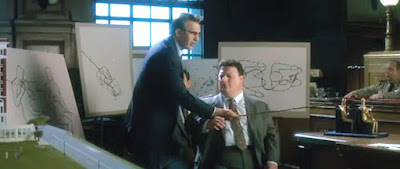
 
These increasingly dense and dynamic exposition scenes lead up to the mother of all courtroom scenes as Garrison goes in knowing he’s going to lose and goes for it anyway. It is Costner’s Mr. Smith Goes to Washington filibuster moment by way of Gary Cooper as Garrison debunks the Warren Commission Report’s account of Oswald by audaciously showing the real Zapruder film that depicted the Kennedy killing in real time. Stone edits in recreation footage with actual footage of the assassination as Garrison lays it all out. The filmmaker also recreates Kennedy’s controversial autopsy and shows actual photos of the man taken at the time.
 
This scene involves a massive amount of dialogue and information to convey and Costner handles it like a pro, making this exposition compelling, especially at the end when the actor performs his final speech without the aid of intercutting other footage. It’s Costner out there on his own, even getting emotional towards the end at the most powerful moment when Garrison address the jury, “Show this world that this is still a government of the people, for the people and by the people. Nothing as long as you live will ever be more important. It’s up to you.” And with that last line, Costner breaks the fourth wall. That line is meant for us and is one of the most moving parts of Garrison’s speech.

While attending the Latin American Film Festival in Havana, Cuba, Stone met Sheridan Square Press publisher Ellen Ray on an elevator. She had published Jim Garrison's book On the Trail of the Assassins. Ray had gone to New Orleans and worked with Garrison in 1967. She gave Stone a copy of Garrison's book and told him to read it. He did and quickly bought the film rights with his own money. The Kennedy Assassination had always had a profound effect on his life and he eventually met Garrison, grilling him with a variety of questions for three hours. The man stood up to Stone's questioning and then got up and left. His hubris impressed the director.
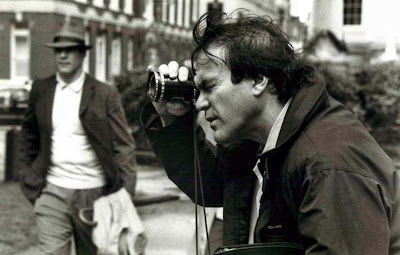
 
Stone was not interested in making a film about Garrison's life but rather the story behind the conspiracy to kill Kennedy. To this end, he also bought the film rights to Crossfire: The Plot That Killed Kennedy by Jim Marrs. When Stone set out to write the screenplay, he asked Columbia University’s Professor of Journalism Zachary Sklar to co-write it with him and distill the Garrison book, the Marrs book and all the research he and others conducted into a script that would resemble what he called "a great detective movie." Stone told Sklar his vision of the movie: "I see the models as Z (1969) and Rashomon (1950), I see the event in Dealey Plaza taking place in the first reel, and again in the eighth reel, and again later, and each time we're going to see it differently and with more illumination.”
 
Sklar worked on the Garrison side of the story while Stone added the Oswald story, the events at Dealey Plaza and the "Mr. X" character. To tell as much of the story as they could, Stone and Sklar used composite characters, a technique that would be criticized in the press, most notably the "Mr. X" character played by Donald Sutherland and who was a mix of several witnesses and retired Air Force Colonel L. Fletcher Prouty, an adviser on the film.

In 1989, Stone met with the three top Warner Bros. executives – Terry Semel, Bob Daly, and Bill Gerber – who had been interested in his work for some time. At the time, Stone was trying to make a film about Howard Hughes but Warren Beatty owned the rights. Stone then pitched JFK to them in 15-20 minutes: “I told them I wanted JFK to be a movie about the problem of covert parallel government in this country and deep political corruption.” Semel remembers Stone asking them, “’Are you concerned politically? Would it affect your company? Are there negative reasons why you wouldn’t do it?’ My immediate reaction was, ‘No, we should do it.’ If it’s entertaining and it’s intriguing, a great murder mystery about something we all cared about and grew up thinking about, why not?” A handshake deal was done and the studio agreed to a $20 million budget.
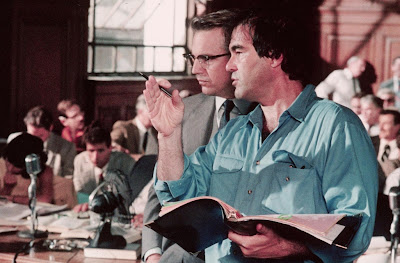
 
Stone could have shopped JFK around in the international market but chose WB because, “I knew the material was dangerous and I wanted on entity to finance the whole thing and the history of WB, given Terry Semel’s record of political films (All the President’s Men, The Parallax View and The Killing Fields), was my first choice.” Kevin Costner signed on to play Garrison in 1991, which pleased the studio who wanted a bankable movie star attached to the project. In addition, independent producer Arnon Milchan came on board as an executive producer and doubled the budget allowing Stone to cast a star-studded supporting cast around Costner.
 
Stone ambitiously wanted to recreate the Kennedy Assassination in Dealey Plaza and his producers had to pay the Dallas City Council a substantial amount of money to hire police to reroute traffic and close streets for three weeks. He only had ten days to shoot the footage. Getting permission to shoot in the Texas School Book Depository was more difficult. They had to pay $50,000 to put someone in the window that Lee Harvey Oswald was supposed to have shot Kennedy. They were allowed to film in that location only between certain hours with only five people on the floor at one time: the camera crew, an actor, and Stone. Co-producer Clayton Townsend has said that the hardest part was getting the permission to restore the building to the way it looked back in 1963. That took five months of negotiation.

Filming was going smoothly until several attacks on the film in the press surfaced in the mainstream media including the Chicago Tribune, published while the film was only in its first weeks of shooting. Five days later, the Washington Post ran a scathing article by national security correspondent George Lardner entitled, "On the Set: Dallas in Wonderland" that used the first draft of the JFK screenplay to blast it for "the absurdities and palpable untruths in Garrison's book and Stone's rendition of it.” The article pointed out that Garrison lost his case against Clay Shaw and claimed that he inflated his case by trying to use Shaw's homosexual relationships to prove guilt by association. Other attacks in the media soon followed. However, the Lardner Post piece stung the most as he had stolen a copy of the script. Stone recalls, "He had the first draft, and I went through probably six or seven drafts.”
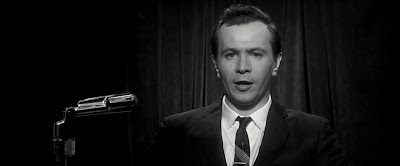
 
The film depicts the events leading up to and after the assassination as a densely constructed story complete with jump cuts, multiple perspectives, a variety of film stocks and the blending of actual archival footage with staged scenes dramatized by a stellar cast of actors. This blurring of reality and fiction by mixing real footage with staged footage makes it difficult to discern what really happened and what is merely speculation. Stone does this to create what he calls "a countermyth to the myth of the Warren Commission because a lot of the original facts were lost in a very shoddy investigation," and simulate the confusing quagmire of events as they are depicted in Warren Report. Stone creates different points of views or "layers" through the extensive use of flashbacks within flashbacks. Stone has said that he “wanted the film on two or three levels — sound and picture would take us back, and we’d go from one flashback to another, and then that flashback would go inside another flashback ... I wanted multiple layers because reading the Warren Commission Report is like drowning.” This technique conveys the notion of confusion and conflict within evidence
 
Kevin Costner acts as the perfect mouthpiece for Stone’s theories. The auteur’s infamously forceful directorial approach to his actors pays off here as he reins in the Costner’s usual tics and mannerisms. Stone was no dummy — he knew that by populating his film with many famous faces, he could make the potentially bitter pill that was his film that much more palatable to the mainstream movie-going public. The rest of the cast is phenomenal. Gary Oldman delivers an eerily authentic portrayal of the enigmatic Lee Harvey Oswald. Tommy Lee Jones is note-perfect as the refined, self-confident businessman, Clay Shaw. Even minor roles are filled by such name actors as Vincent D’Onofrio, Kevin Bacon, Jack Lemmon, and Walter Matthau.

The film throws many characters at us and it is easier to keep track of them by identifying them with the famous person that portrays them. Stone was evidently inspired by the casting model of a documentary epic he had admired as a child: “Darryl Zanuck's The Longest Day (1962) was one of my favorite films as a kid. It was realistic, but it had a lot of stars ... the supporting cast provides a map of the American psyche: familiar, comfortable faces that walk you through a winding path in the dark woods.” Future biopics with sprawling casts, like The Insider (1999), and Good Night, and Good Luck (2005), and The Good Shepherd (2006) would use this same approach.
 
Seeing JFK now, one is reminded that first and foremost, it is a top-notch thriller. There are so many fantastic scenes of sheer exposition that would normally come across as dry and boring but are transformed into riveting scenes in the hands of this talented cast. For example, the famous scene between Garrison and X (Sutherland) where the mysterious man lays out all the reasons why Kennedy was killed and how is not only a marvel of writing but also of acting as the veteran actor gets to deliver what is surely one of the best monologues ever committed to film.
 
Once the film was released in theaters, it polarized critics. The New York Times ran an article by Bernard Weinraub entitled, "Hollywood Wonders If Warner Brothers let JFK Go Too Far.” In it, he called for studio censorship and wrote, "At what point does a studio exercise its leverage and blunt the highly charged message of a film maker like Oliver Stone?" The newspaper also ran a review of the film by Vincent Canby who wrote, "Mr. Stone's hyperbolic style of film making is familiar: lots of short, often hysterical scenes tumbling one after another, backed by a soundtrack that is layered, strudel-like, with noises, dialogue, music, more noises, more dialogue.” However, Roger Ebert praised the film in his review for the Chicago Sun-Times, saying, "The achievement of the film is not that it answers the mystery of the Kennedy assassination, because it does not, or even that it vindicates Garrison, who is seen here as a man often whistling in the dark. Its achievement is that it tries to marshal the anger which ever since 1963 has been gnawing away on some dark shelf of the national psyche.”

Rita Kempley in the Washington Post wrote, "Quoting everyone from Shakespeare to Hitler to bolster their arguments, Stone and Sklar present a gripping alternative to the Warren Commission's conclusion. A marvelously paranoid thriller featuring a closetful of spies, moles, pro-commies and Cuban freedom-fighters, the whole thing might have been thought up by Robert Ludlum.” On Christmas Day, the Los Angeles Times ran an article entitled, "Suppression of the Facts Grants Stone a Broad Brush" attacking the film. New York Newsday followed suit the next day with two articles – "The Blurred Vision of JFK" and "The Many Theories of a Jolly Green Giant.” A few days later, the Chicago Sun-Times ran an article entitled, "Stone's Film Trashes Facts, Dishonors J.F.K." Stone even received death threats as he recalled in an interview, "I can't even remember all the threats, there were so many of them.” Time magazine ranked it the fourth best film of 1991. Roger Ebert went on to name Stone's movie as the best film of the year and one of the top ten films of the decade.
 
Stone paints his canvas with broad brushstrokes and powerful images. This isn’t a documentary or even a docudrama. It is a fever dream straight out of Stone's head. He’s a Baby Boomer upset that the death of Kennedy obliterated the idealism of the '60s and uses the film to vent about it. JFK is an important work in the sense that it accurately portrays the assassination of Kennedy as a complex public event surrounded by chaos and confusion. Stone’s film presents an intricate conspiracy at the source of the killing with one main protagonist who exposes the conspiracy to be an intricately constructed coup d'état. JFK takes a larger, confrontational stance by boldly implicating the government in the conspiracy and the mainstream media in conspiring to cover it up. Stone is using the persuasive power of film to reach the largest number of people he can to wake them up and to reveal how they have been deceived by higher powers. There is no mistaking the importance of the assassination of Kennedy in American culture. Based on the excitement that surrounded Stone's film, the American public was still greatly interested in the event with more and more people believing in a plot to kill the President. Kennedy's death continues to intrigue and interest people who are more open to the idea of a conspiracy that this film openly advocates. For better or for worse, it helped cultivate a conspiracy culture that has only grown larger and more unwieldy with the rise of social media. JFK continues to serve as a powerful piece of cinematic agitprop whose conspiracy theories can be questioned and criticized but its power as an engaging and moving thriller cannot.
 

SOURCES
 
Fisher, Bob. “The Whys and Hows of JFK.” American Cinematographer. February 1992.
 
Petras, James. “The Discrediting of The Fifth Estate: The Press Attacks on JFK.” Cineaste. May 1992.
 
Riordan, James. Stone: A Biography of Oliver Stone. Aurum Press. 1996.
 
Scheer, Robert. “Oliver Stone Builds His Own Myths.” Los Angeles Times. December 15, 1991.

Friday, April 17, 2015

Snake Eyes

In the 1990s, filmmaker Brian De Palma struggled between making expensive, high profile failures like The Bonfire of the Vanities (1990) and pushing through personal projects like Raising Cain (1992) and commercial triumphs like Mission: Impossible (1996). Fresh from the success of the latter film, he rounded out the decade with conspiracy thriller Snake Eyes (1998) starring Nicolas Cage. De Palma employed his trademark stylistic bag of tricks to deliver a never dull thriller that was ultimately marred by a weak ending (infamously changed from the original) leaving most critics cold. The film was a modest commercial success and summed up the filmmaker’s performance during the ‘90s as it attempted to balance his personal touches with a commercial sensibility with uneven results.

Rick Santoro (Nicolas Cage) is a flashy, flamboyant, and very corrupt Atlantic City cop who attends a big-ticket prizefight where he meets Kevin Dunne (Gary Sinise), a United States Navy Commander and his straight-laced best friend from childhood. Dunne is in charge of security for Secretary of Defense Charles Kirkland (Joel Fabiani). During the course of the fight Kirkland is subsequently shot and killed by an assassin with Santoro as a key witness to the incident.

As Santoro investigates the murder he begins to realize that there was a lot more going on during the fight than he initially thought. Who was the beautiful redhead (Jayne Heitmeyer) sitting by herself? What happened to the woman (Carla Gugino) dressed in white talking to Kirkland just before he was shot? Why did the supposedly invincible champ (Stan Shaw) lose the fight so easily? The rest of the film follows Santoro's attempts to answer these questions and piece everything together.


Nicolas Cage clearly relishes the role as it allows him to cut loose and have fun with the character. This performance sees him reverting back to his old manic self that you can see bouncing through films like Raising Arizona (1987) or Wild at Heart (1990). Cage seems to be gleefully going over the top in many of the early scenes and it suits his egotistical cop character. Rick’s personality is as ostentatious as his tacky attire. Cage also isn't afraid to play a character that, initially, isn't that nice of guy. He's a self-serving cop only out for himself. He's not your traditional hero. As Rick’s investigation continues, however, and he realizes that there is more going on, Cage modulates his performance as his character wises up and tones down the flash as Rick applies skills he hasn’t used in ages. Cage’s character becomes much more interesting as his life gets increasingly complicated.

Kevin is everything that Rick is not – restrained and responsible. We soon learn that this is all an elaborate façade while with Rick what you see is what you get. Gary Sinise is excellent as the intense Navy Commander that seems too good to be true. That’s because he is and the actor plays an unreliable witness very well. Initially, we don’t have any reason to doubt him but after Rick questions Kevin De Palma audaciously reveals his real agenda so that we now know more than Rick does and spend the rest of the film watching him trying to figure it out. The scenes between Cage and Sinise are a lot of fun to watch as we see two veteran actors play so well of each other, especially as more revelations come to light.

De Palma's choice in actresses with a captivating presence is readily evident in his casting of Carla Gugino as the alluring key figure in the mystery and the only voice of reason in the film – a whistleblower trying to do the right thing. Sadly, she’s largely wasted in a role that amounts to nothing more than relaying expositional dialogue and then reduced to a damsel in distress.


Snake Eyes is a great looking film. De Palma is in fine form and he's got longtime cinematographer Stephen H. Burum (The Untouchables) behind the camera. This makes for a visually interesting film as Burum employs De Palma’s entire bag of tricks: split screens, unusual P.O.V. shots, skewed angles, and starts things off with a bravura 10+minute-long take with no cuts that introduces all of the major characters and the world they inhabit. De Palma does it all while following Rick, which provides all kinds of insights into that man – what he does, his relationship to others and his larger than life personality. It gives Cage a chance to show off, which he does in typical flashy fashion. This long take also forces us to pay attention to not just the people Rick interacts with but also the background details. It is important to what happens later on. This opening sequence also establishes the most crucial relationship in the film – the one between Rick and Kevin, which is increasingly put to the test.

David Koepp’s screenplay presents the Kirkland assassination Rashomon-style as we see it repeatedly from the point-of-view of key figures so that we get more pieces of the puzzle, figuring it out as Rick does. It’s an interesting way to present a thriller of this kind and De Palma and Koepp keep things together for the most part, but one character delivers a monologue near the end of the film that seems like something a Bond villain would spout. For the most part, the director manages to keep us engaged after the show-stopping first ten minutes, but loses it at the film’s climax, which strains credulity.

Initially, Brian De Palma had Al Pacino in mind to play Rick Santoro with an older man-young man dynamic with the Kevin Dunne role. However, Pacino had just done that with Donnie Brasco (1997) and was hesitant to repeat himself. Then, Gary Sinise became available and De Palma went with him and Nicolas Cage, changing the dynamic to characters that were the same age. Sinise worked with De Palma, developing his character’s backstory and motivation for what he was doing while the director had Cage watch screwball comedies because he wanted the actor to say his dialogue at “that Howard Hawks-like speed.” Cage also came up with his character’s flashy attire.


De Palma decided to have the long take at the beginning of the film because he wanted to “show the whole universe that the Nick Cage character was in. I wanted to show HIS world, I wanted to show it really fast, and I wanted to show it whole, in an exciting venue.” He found shooting the actual sequence “akin to a high-wire act: you can get very exhilarated trying to pull it off. It’s also very energizing for the actors. There is a kind of excitement in their performance that you don’t get when you start shooting in master shots, then medium shots, then close-ups.” The opening tracking shot was actually compromised of four SteadiCam shots because 20-minute camera magazines did not exist.

Initially, De Palma had the idea that the ending was to involve Deus ex machine: “we were dealing with such a corrupt world that the only way to solve the problem is to have a hurricane come through and wipe it all away.” Test screening audiences did not like it and so De Palma shot another ending, “which I don’t think is as effective.” Screenwriter David Koepp remembers that in the original ending Rick saved Kevin but test audiences wanted the bad guy to get his comeuppance.

Snake Eyes received mostly mixed to negative reviews. Roger Ebert gave it out one out of four stars and wrote, “Then comes an ending so improbable it seems to have been fashioned as a film school exercise: Find the Mistakes in This Scene.” In his review for The New York Times, Stephen Holden wrote, “If nothing else in Snake Eyes matches the opening sequence in adrenaline-pumping excitement, the movie never quite fizzles. It just gets sillier and more exaggerated in the self-parodying ways Mr. De Palma’s movies often do.” Entertainment Weekly gave the film a “D” rating and Owen Gleiberman wrote, “The camera choreography is exquisite, but De Palma is so entranced with staging his purplish voyeuristic set pieces that we can hardly believe a minute of what we’re seeing. He’s become the masturbator of suspense.” The Los Angeles Times’ Kenneth Turan wrote, “Both Koepp’s script and De Palma’s directing style encourage the actors to be over-emphatic, and macho posturing is high on the list of the film’s weaknesses.” Finally, in his review for the New York Observer, Andrew Sarris wrote, “Mr. De Palma and his collaborators have told a comparatively simple story with a very rich and resourceful mise en scene. This sort of mastery has become so rare in today’s mainstream movies that I find myself more bewitched and beguiled than perhaps I should be.”


Ever the consummate professional, De Palma orchestrates key sequences for maximum impact as he ratchets up the tension by placing certain characters in dangerous situations that they narrowly escape. At times, Snake Eyes seems like a film of two minds. On one hand, it wants to have the stylistic flourishes of De Palma’s more personal work while fulfilling the generic conventions of a thriller. That being said, the film is pure eye candy thanks to Burum’s virtuoso camerawork, which does most of the heavy lifting as does Cage’s deliciously manic performance. Snake Eyes may lack the depth of other De Palma films, like Blow Out (1981), but he seems content to deliver an entertaining thriller utilizing every stylistic trick in his impressive arsenal with the skill of a master filmmaker. The film may lack any kind of real substance but it is wonderful visual eye candy. There’s something enjoyable about letting an expert craftsman like De Palma manipulate us because he does it so well.


SOURCES

Behar, Henri. “Brian De Palma on Snake Eyes.” Film Scouts. August 1998.

Jones, Wil. “David Koepp Interview: Mortdecai, Jurassic Park, Indy 4.” Den of Geek! January 23, 2015.


Taylor, Drew. “Brian De Palma Talks Passion, Digital vs. Film, Psychosexual Thrillers and the Abandoned Ending of Snake Eyes.” The Playlist. July 30, 2013.

Friday, June 13, 2014

Flashpoint

Thanks to the Watergate scandal, the 1970s was a fantastic decade for paranoid conspiracy thrillers with such fine examples as The Parallax View (1974), Three Days of the Condor (1975), and All the President’s Men (1976) among the very best of that era. Audiences had become cynical and jaded about their government and were receptive to films that questioned authority. By the end of the ‘70s, a certain amount of fatigue set in and people wanted to see more upbeat fare like Jaws (1975) and Star Wars (1977) – escapist entertainment. By the 1980s, it was getting harder for conspiracy thrillers to attract mainstream audiences with rock solid films like Blow Out (1981) and Cutter’s Way (1981) failing at the box office. The little-seen Flashpoint (1984) also deserves to be mentioned with these other two films as one of the best thrillers to come out of this decade.

Logan (Kris Kristofferson) and Wyatt (Treat Williams) are two United States Border patrolmen that serve in the worst performing sector in Texas. So much so, that their boss (Kevin Conway) has brought in a pencil-pusher from Washington, D.C. to demonstrate a new scanning system that involves geo-sensors buried in the ground that will pick up an illegal immigrant trying to cross the border. Once the sensors are in place not as many agents will be needed, which means roughly two-thirds of their staff will be fired. Understandably upset at the prospect of planting the very technology that will conceivably cost them their livelihood; Logan and Wyatt continue to do their job.

One day while out on a call, Logan nearly crashes his jeep and in the process uncovers a vehicle buried in the ground. After doing some digging, he finds $800,000 and shows Wyatt what he found. Further searching uncovers a rifle and a license plate that dates back to 1963. They decide to check on the money and if it’s legit they’ll keep it in case they’re fired. Logan and Wyatt soon find out the dead guy in the jeep was not your average crook and cross paths with a hard-nosed FBI agent by the name of Carson (Kurtwood Smith) who arrives to take charge of a drug bust.


Logan is the laid-back veteran who’s been around long enough to know how to work the system while Wyatt is a young hothead that believes he can still make a difference. They make a good team, complimenting each other’s strengths and weaknesses. Kris Kristofferson and Treat Williams play well off each other and are believable as a duo that has worked together for some time. This is conveyed in the way they interact with each other, like the scene where Logan and Wyatt come across two women (played by Tess Harper and Jean Smart) whose car broke down in the desert. While checking out the engine the two men think up an excuse to keep these lovely ladies around long enough to take them out for a night on the town.

Williams is well-cast as the quick-tempered Wyatt, playing him as a man who hasn’t had the integrity beat out of him by the system. It exists in Logan too, but it has been lying dormant until the drug bust case and the appearance of the FBI agent that goes with it awakens the feeling. Kristofferson does a nice job of playing a guy who isn’t as jaded about the world as he would like others (and maybe himself) believe. Wyatt almost has himself convinced, but this case continues to gnaw away at him and he finally has a reason to give a shit about something again.

The always watchable Kurtwood Smith is excellent as the no-nonsense Carson. He takes what could have been a typical antagonist role and makes it special in a scene where Carson questions Logan’s decision to pass up a promising career in the military to be a border patrol guard out in the middle of nowhere. It’s a wonderfully acted monologue as the FBI agent lays it all out for Logan:


“The law of supply and demand … Your fucking job depends on those wetbacks. And if we didn’t have ‘em, we’d invent them. Otherwise, how would your department justify the millions it gets from Congress each year? It’s the American way, pal. Supply and demand. And when the supply is lacking you create it. Every morning I get up and I thank God for drugs and murder and subversion. Because without them we’d all be out of a job.”

Logan thinks he knows how things work, but he meets his match with the amoral Carson who has no illusions about what he does and why. Smith nails this scene without any flash – just straightforward acting with a slight air of menace as he portrays a man that Logan could have easily become if he hadn’t chosen to be a border patrolman.

Flashpoint received mixed reviews from the critics that saw it. Roger Ebert gave the film three out of four stars and wrote, “Flashpoint is such a good thriller for so much of its length that it’s kind of a betrayal when the ending falls apart. Why did they try so hard and then give up at the finish line?” In her review for The New York Times, Janet Maslin wrote, “Mr. Tannen’s strength is his ability to grab his audience’s interest quickly and to hold on to it, even by the most superficial means. Even when the movie doesn’t entirely make sense, it manages to be effective.”


Flashpoint is an engrossing mystery that gradually reveals itself the deeper Logan and Wyatt become involved in it. The film only gets more interesting as the scope of the conspiracy becomes known and we’re right there with our two protagonists as they uncover it. It is refreshing to see a thriller that eschews wall-to-wall action and convenient coincidences that plague many contemporary thrillers in favor of two protagonists that actually use their intelligence and abilities to figure things out. That’s not to say the film doesn’t have its exciting moments, like when a wounded Logan outmaneuvers three armed antagonists using his wits as much as his marksmanship.


That being said, Flashpoint places an emphasis on the duo’s savvy and keen observations of a given scene by studying things like tire tracks or surveying the terrain. The problem Logan and Wyatt face is that they get involved in something that puts them in grave danger. The film didn’t do very well because it flew in the face of the feel-good capitalism of the Reagan era by not only criticizing the problem of illegal immigration in America, but also the dirty secrets the U.S. government keeps. Flashpoint’s commercial failure can be chalked up partly to bad timing and now the time is right for it to be rediscovered.


Check out Sean Gill's fantastic review of this film over at his blog - Junta Juleil's Culture Shock.

Friday, August 24, 2012

The Bourne Legacy


With The Bourne Ultimatum (2007) came a satisfying conclusion to the popular spy franchise as its protagonist finally came to terms with who he was and how he came to be a government-trained assassin. Never one to let a lucrative franchise die, Universal Pictures soon started to develop yet another installment. However, Matt Damon and Paul Greengrass – Ultimatum’s star and director respectively – felt that there was no more story to tell and bowed out, leaving the studio with quite a dilemma. So, they went back to the architect of the series, screenwriter Tony Gilroy. He had written the first draft for Ultimatum before two other writers were hired while he tried his hand at directing. He had made waves in the press about not being particularly thrilled with the direction the third film had taken and so I’m sure he saw The Bourne Legacy (2012) as a chance to make this franchise his own and no doubt itching to bounce back after the lackluster box office of his last film Duplicity (2009).

The problem Gilroy faced was getting people interested in a film no longer starring the series’ beloved lead actor. However, he wisely cast a completely different actor with Jeremy Renner (The Hurt Locker) who, thankfully, doesn’t play a rehash of Jason Bourne. Gilroy also wisely acknowledges what came before by having the ending of Ultimatum overlap with Legacy. In doing so, this new installment isn’t a remake but rather a reboot/sequel hybrid that exists in the same world created in the first three films.

After Jason Bourne exposed the United States government’s top secret operations, Blackbriar and Treadstone, the CIA bigwigs enlist retired U.S. Air Force Colonel Eric Byer (Edward Norton) to cover their tracks. This involves eliminating all operatives in other clandestine undertakings, chief among them Operation Outcome. It is one of the Department of Defense’s black ops programs that provides agents with green pills that enhance their physical skills and blue pills that enhance their mental capabilities. One by one, these agents are killed except for Aaron Cross (Jeremy Renner), who’s been on a training exercise in the remote wilderness of Alaska.

The CIA also tries to kill the scientists that researched the pills by brainwashing one of them (Zeljko Ivanek) to shoot his co-workers, save Dr. Marta Shearing (Rachel Weisz) who narrowly survives. This is a chilling scene as Gilroy ratchets up the tension with the killer coldly gunning scientists down like some kind of mild-mannered (yet frighteningly lethal) Manchurian Candidate. Naturally, Byer and his crew create a cover story for the media of just another crazed rampage by a lone gunman. As it turns out, Marta originally administered Aaron’s meds and so he seeks her out to get more pills and get some answers, while Byer tries to kill them. Once they are on the run, Gilroy cranks up the paranoia factor as simple tasks like boarding a plane are a nerve-wracking experience as any fellow passenger could be an incognito government operative sent to kill them.

Aaron Cross is a much chattier character than the taciturn Bourne and, unlike him, Aaron knows exactly who he is. Once a good soldier, he now questions what he’s doing and why he needs to be dependent on these pills. This latter dilemma manifests itself more and more as the film goes on with Aaron conveying, at times, the desperation of a junkie looking for his next fix. With The Bourne Legacy, Renner completes a trifecta of high-profile action films that include Mission: Impossible – Ghost Protocol (2011) and The Avengers (2012). The supporting roles he had in those two films were just warm-ups for Legacy where he finally gets to headline his own big, Hollywood blockbuster and pulls it off.

Rachel Weisz’s Marta is not the damsel in distress she initially appears to be as the scientist quickly acclimates to her predicament – being on the run with Aaron – and even helps him take out the occasional bad guy. Not surprisingly, Aaron and Marta’s relationship is initially an abrasive one as he demands more pills and answers from her, but she soon realizes that without his help she will most certainly wind up dead before the day is out. It is an uneasy alliance that you would expect from two people thrown together in a desperate situation but over the course of the film they learn to trust each other. Weisz plays a convincing scientist, adept at spouting the technical jargon that comes with the role, but she also has some touching scenes with Renner as his character becomes as dependent on her as she is on him. The Bourne Legacy is a nice change of pace for the actress who hasn’t been in an action-oriented franchise since The Mummy films.

Interestingly, the idea of drug-induced government operatives eerily echoes, albeit on a much larger scale, a storyline in the fourth season of the television show Buffy the Vampire Slayer. Buffy falls in love with a college student by the name of Riley who is actually a pharmaceutically-enhanced government agent, and much like in the Bourne films, this top secret operation is eventually exposed and then covered up by the government. Once Riley realizes the true nature of the operation, he goes rogue and even begins to feel the detrimental effects of the drugs he was on – his pain receptors shut down and he must seek treatment. Sound familiar? Now, genetically enhanced government operatives are nothing new. Comic book superhero Captain America is also enhanced through genetic engineering but the similarities between The Bourne Legacy and this storyline from Buffy the Vampire Slayer are quite striking.

For those not crazy about Paul Greengrass’ frenetic, often disorienting hand-held camera action sequences in The Bourne Supremacy (2004) and Ultimatum, will be happy to know that Legacy is, by and large, devoid of them. Gilroy shows a good sense of geography and skill at choreography during these scenes, in particular, a dynamic and tense battle in Marta’s home between her and Aaron and a team of assassins sent to kill them. With this sequence – and others – Gilroy creates a real sense of danger and scary intensity as one feels that Aaron and Marta’s lives are really at risk.

The Bourne Legacy could be seen as an opportunistic cashgrab by a studio afraid to let a lucrative franchise lie dormant but I don’t think Tony Gilroy sees it this way. In addition to delivering a rousing spy thriller, he raises some interesting questions about the culpability of pharmaceutical companies that research and create performance enhancing drugs and this is touched on in an early conversation between Aaron and Marta where he chastises her for claiming ignorance over the true purpose of the drugs she helped create, pointing out that they control him. Gilroy’s skill at writing smart dialogue comes into play during this scene and throughout the entire film as he creates an intelligent and exciting thriller that opens up the world he first helped create in The Bourne Identity (2002). That being said, he doesn’t deviate from the template established in the first film as our heroes are tracked with state-of-the-art surveillance technology by government officials barking orders in a control room all the while the protagonists traverse the globe looking for answers and evading the bad guys. While, Legacy is not as good as the first three films – Matt Damon was just too good at eliciting our sympathies and, at the time, those films were a fresh alternative to the Bond franchise – it is very well done and a promising start for a new series of films with a new protagonist to root for.