"...the main purpose of criticism...is not to make its readers agree, nice as that is, but to make them, by whatever orthodox or unorthodox method, think." - John Simon

"The great enemy of clear language is insincerity." - George Orwell
Showing posts with label 2010s. Show all posts

Monday, October 30, 2023

The Lords of Salem


With the exception of Eli Roth, no other filmmaker in the 2000s has divided horror movie fans more than hard rocker turned director Rob Zombie. People either love or hate his brand of grungy, white trash nihilistic cinema where he identifies with the antagonists rather than the protagonists, be it the Firefly clan in House of 1000 Corpses (2003), The Devil’s Rejects (2005), and 3 From Hell (2019), or Michael Myers in Halloween (2007) and its sequel (2009). With The Lords of Salem (2012), he created his first traditional protagonist only to place her in an unconventional film. Enjoying the most creative freedom he had since Rejects, he eschewed the gore and extreme violence of his previous films in favor of a heavy atmosphere of dread. Freedom from the constraints of a studio franchise (Halloween) emboldened Zombie to push himself as a filmmaker, creating a fascinating phantasmagorical experience.
 
Heidi LaRoc (Sheri Moon Zombie) is a disc jockey at a local, popular Salem hard rock radio station where she co-hosts a show along with two others – Herman “Whitey” Salvador (Jeff Daniel Phillips) and Herman “Munster” Jackson (Ken Foree). She lives with her dog in an old apartment building and one day spots a new tenant in the apartment down the hall. When she asks her landlady (Judy Geeson) the identity of the new inhabitant, she is told that no one lives there.
 
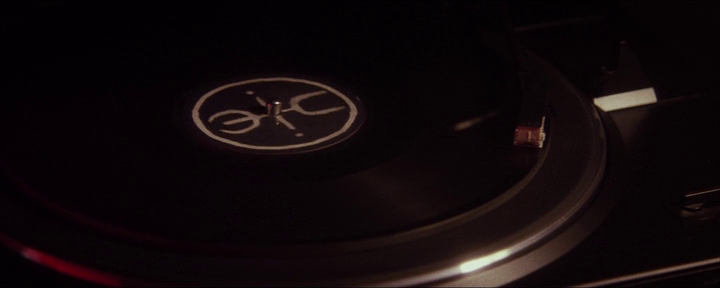
One day at work, a mysterious record shows up in an old wooden box, addressed to Heidi, by a band called The Lords. She listens to it with Whitey and the music causes her to have a vision of a 17th century-era coven of Satan-worshipping witches. She finds herself inexplicably drawn to the apartment down the hall and once there, finds herself confronted by disturbing visions, including a nightmarish beast in an otherworldly landscape. Heidi’s mind unravels over the course of the film as The Lords record really puts the zap on her, blurring the lines between reality and nightmare.

Right from the get-go, Zombie does a wonderful job capturing the cool, crisp autumn days in the Northeast via the cinematography, drawing us into this world. He utilizes a warm, amber filter for night scenes and muted colors, creating a grey, cold look for day scenes. For the first third, he adopts a slow burn approach, not revealing too much, gradually building the dread, letting us get to know Heidi so that we care about happens to her in the latter two acts of the film. He populates the film with Kubrickian low-angle shots of hallways and breaks up the story into days of the week, a la The Shining (1980). He also shows a knack for striking visuals as evident in the fiery, apocalyptic inferno that is the 17th century witch trials, illustrating the Puritans meting out their religious brand of ‘justice.’
 
Sheri Moon Zombie has gotten a lot of flak for her acting prowess and the fact that she almost exclusively appears in her husband’s films, usually in a supporting role, whether it be significant (Rejects) or smaller (Halloween). In The Lords of Salem she is cast in the lead role, the responsibility of carrying the film placed squarely upon her shoulders. Because Moon’s acting ability is inherently tied to her expressive looks and may not have the broadest range, she benefits from Zombie’s ‘less is more’ approach. Heidi doesn’t have a lot of dialogue and, once the effects of The Lords record take hold on her character. She spends most of her time reacting to the strange things going on around her. Sheri does a commendable job of showing a woman plagued by horrible visions of faceless surgeons pulling her intestines out, struggling to make sense of what is happening, and displaying increasingly erratic behavior.
 
Veteran actor Bruce Davidson is excellent as a Salem witch scholar that figures out the connection between The Lords record and the Salem witches. Zombie regular Jeff Daniel Phillips is also memorable as a disc jockey that works and is close friends with Heidi. There is a nicely understated romantic tension between the two characters, suggesting a longstanding friendship, evidenced by the familiar shorthand between them.

As with his other films, Zombie acknowledges horror films from the past by casting its royalty with the likes of Dee Wallace, Judy Geeson, and Ken Foree in crucial roles, and blink-and-you’ll-miss-it cameos by Barbara Crampton, Michael Berryman, and Sig Haig. This isn’t simple stunt casting or a knowing wink to fellow horror genre fans, rather actors playing bonafide, lived-in characters.

The Lords of Salem is a captivating film with Brandon Trost’s atmospheric cinematography giving it a much richer look than its meager $1.5 million budget would suggest. Zombie gets the most out of his locations, choosing those that give a real sense of place including, most crucially, the apartment building that Heidi inhabits. Everything has a lived-in look, from the clutter in the D.J. booth where Heidi does her show to Davidson’s bookcase-dominated home.
 
If there is one erroneous aspect of this film, it’s the reliance on the tired cliché of Satan-worshipping witches. Witchcraft is pagan in nature. While a large number of witches don’t worship any god or goddess, there are those that do…but not Satan. It could be that he is used in film because it is an easily identifiable embodiment of evil, even outside of the Christian faith. Zombie did such a great job in all other areas and seemed to be interested in bucking tradition, then fell back on a stereotypical portrayal that is disappointing, but hardly surprising as this has been done in countless horror films.
 
Zombie tones down the gore in favor of disturbing imagery reminiscent of Ken Russell’s The Devils (1971), creating an overwhelming feeling of dread and unease. In that sense, The Lords of Salem is a refreshing outlier in Zombie’s filmography as it dials back the aggressive, extreme horror films of such films as 31 (2016) by shifting gears to more supernatural-based horror, as demonstrated in the showstopping finale. Zombie pulls out the strangest imagery that he’s ever produced and marries it with his trademark downbeat ending, scored to chilling effect with “All Tomorrow’s Parties” by The Velvet Underground and Nico. The Lords of Salem is not a scary movie per se… instead Zombie creates a more chilling, unsettling experience. It appeared that he was maturing and evolving as a filmmaker but when it barely made back its budget, he went back to what he knew best – extreme horror with hillbillies and white trash with 31. That being said, he is still capable of throwing audiences the occasional curve ball as he did in 2002 with the odd career move of making a studio-backed film adaptation of the much-beloved 1960s family sitcom, The Munsters. True to form, by design or not, Zombie’s work continues to fascinate fans and detractors alike.


Tuesday, December 31, 2019

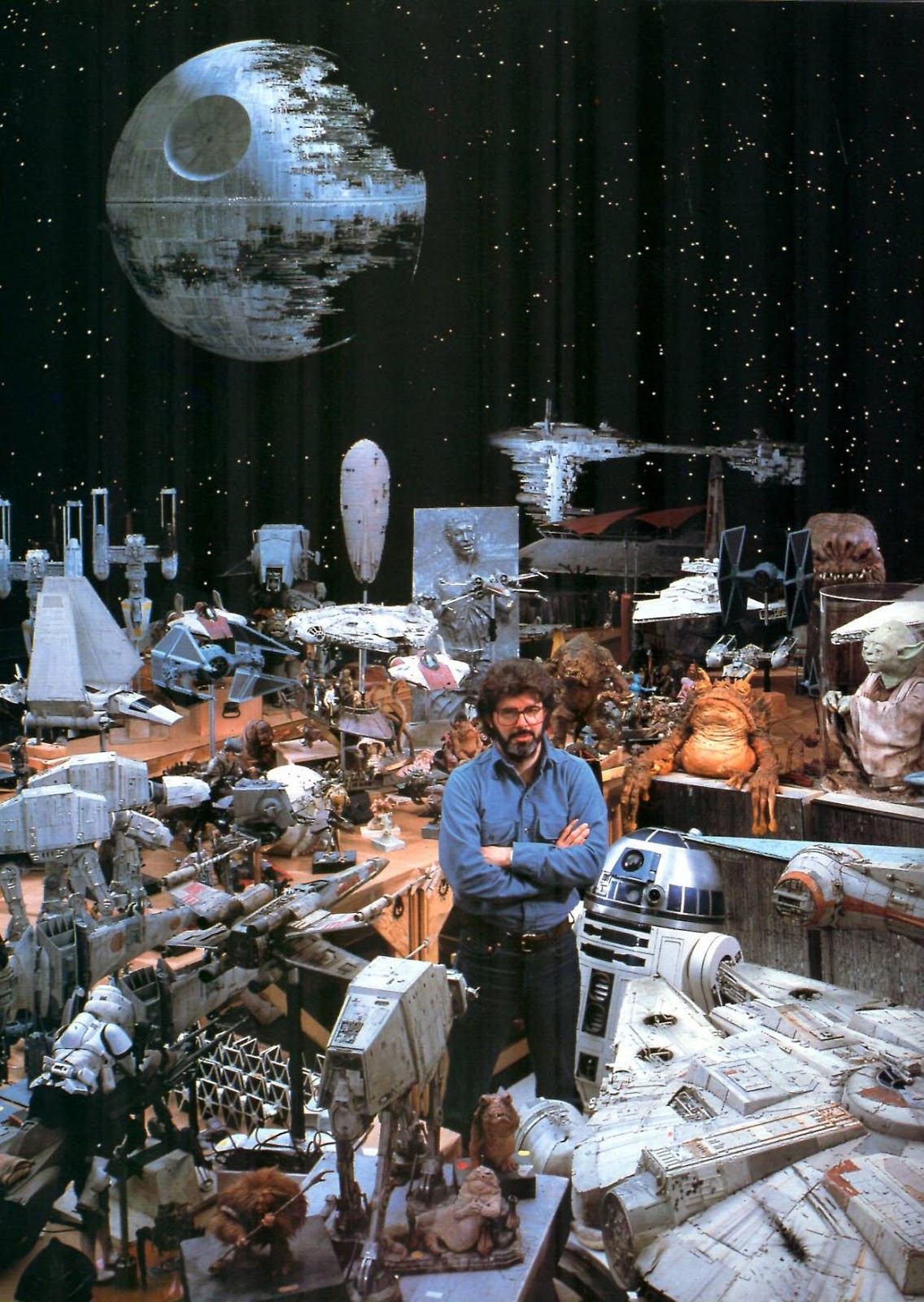
George Lucas vs. Star Wars

Now that I've had some time to reflect on Star Wars Episode IX: The Rise of Skywalker (2019) and the entire Disney trilogy, it has me thinking about Star Wars without George Lucas. The spark of inspiration came from this 2012 interview on StarWars.com with head of Lucasfilm Kathleen Kennedy and Lucas, which is very interesting, especially in regards to the following quotes:


At one point, Kennedy says, "The main thing is protecting these characters." Really? Then how does she explain killing them off over the course of the new movies? For me, I think that is the hardest thing to accept - characters that I love and cherish from the Original Trilogy being killed off and in ways that feel cheap. For example, I don’t mind the idea of killing off Han Solo (Harrison Ford) in Episode VII: The Force Awakens (2015), but it is the way in which it was done that rankles me. It rang false and I expected a very heroic end for a character that deserved a proper demise. I was also fine with Luke Skywalker’s (Mark Hamill) death in Episode VIII: The Last Jedi (2016), which was pretty badass but why did the filmmakers feel the need to kill him off? I’ve always felt that in the Lucas-controlled Star Wars movies, when a major character was killed off it meant something, it was significant – the notable exception being Boba Fett, which was silly and did a great disservice to such a cool character.

In the 2012 interview, Lucas sums up his vision of Star Wars brilliantly:

"There are people out there who don't play by the rules and if you're not careful you're going to lose all your freedoms. At the same time, those people that don't play by the rules because they are selfish and greedy, and turn themselves into evil people who don't care about other people."

Maybe I'm reading too much into this, but I don't think he's talking about Star Wars. He's talking about Hollywood and the studios. He's always been wary and suspicious of them going back to THX 1138 (1971) when the studio cut out five minutes of the film against his wishes. Perhaps that's why he sold off Lucasfilm. He was tired of all the bullshit and baggage that comes with dealing with them.

Check out the body language between Kennedy and Lucas in the 2012 interview and it is very telling indeed. One person can clearly state his vision for his cinematic world. The other basically parrots what has been said and some of what she says feels like lip service. Now, before you say it, I don't bear Kennedy any ill will and I don't buy into any of the conspiracy theories in regards to why Lucas sold off his company, but the more I think about Star Wars since he sold it off the more I find it less and less like what he originally envisioned it to be. Say what you will about the Prequel trilogy but at least it was the vision of one person as opposed to the Disney trilogy, which, at times, lacks focus – due in large part to the switch of directors on The Last Jedi and then back again on The Rise of Skywalker.

In some respects, I feel sorry for Lucas, especially in light of the excerpts from Robert Iger's book where he writes about how Kennedy, director J.J. Abrams, et al ignored Lucas' ideas for the new movies and went in a different direction. I understand the notion of striking out in a new direction but they didn't really do that did they? The Force Awakens is basically a rehash of Episode IV: A New Hope (1977) and Lucas wasn’t happy about that as Iger’s book states:

"Things didn't improve when Lucas saw the finished movie. Following a private screening, Iger recalls, Lucas "didn't hide his disappointment. 'There's nothing new,' he said. In each of the films in the original trilogy, it was important to him to present new worlds, new stories, new characters, and new technologies. In this one, he said, 'There weren't enough visual or technical leaps forward.' He wasn't wrong, but he also wasn't appreciating the pressure we were under to give ardent fans a film that felt quintessentially Star Wars.""

There it is in a nutshell the biggest problem with The Force Awakens and The Rise of Skywalker: the filmmakers were more concerned with giving fans what they wanted instead of staying true to Lucas’ artistic vision. I’m willing to give the former a pass as it managed to renew my love for Star Wars, getting rid of the bad taste left by the Prequels, and introducing us to some wonderful new characters. It doesn’t hold up as well to repeated viewings now that the initial glow has faded. Lucas has made it clear that he was never concerned with what the fans wanted. He had a definite story he wanted to tell and knew how he wanted to tell it whether the fans liked it or not. This may explain why Rian Johnson’s installment – The Last Jedi – is so reviled in some corners of Star Wars fandom as he adhered to Lucas’ notion of remaining true to your own artistic vision. He said in an interview:

“I think approaching any creative process with [the purpose of making fandoms happy] would be a mistake that would lead to probably the exact opposite result. Even my experience as a fan, you know, if I’m coming into something, even if it’s something that I think I want, if I see exactly what I think I want on the screen, it’s like, ‘Oh, okay.’ It might make me smile and make me feel neutral about the thing and I won’t really think about it afterwards, but that’s not really going to satisfy me.”

The Abrams-directed movies are attempting to give the fans what they want instead of staying true to an artistic vision, while Johnson's movie refused to pander to the fans and they crucified him for it. Interestingly, it is the only one of the new movies that Lucas has publicly said he liked. As a result, we get Abrams returning to the fold to "right the ship" as it were with The Rise of Skywalker. The more I think about them, the more I find that they are lacking. I love the new characters but was disappointed at how the Original Trilogy characters were treated. I don't mind killing off characters but have it mean something, which I felt wasn’t the case in some respects. Again, why do they need to be killed off in the first place? It can be a cheap, narrative ploy. Why couldn't some of them just ride off into the sunset? Admittedly, these sentiments come from having grown up with these characters and having genuine affection for them. I feel protective of them.

Love or hate the Prequels at least they did tread new ground in terms of technology and refused rehash what came before in terms of plot and story. Lucas took us to new worlds and introduced us to all sorts of new characters. The problems with these movies is that Lucas surrounded himself with Yes-men whereas on A New Hope and Episode V: The Empire Strikes Back (1980) he had people, like his wife Marcia and producer Gary Kurtz, keeping him in check, curbing his worst tendencies. It really started with Episode VI: Return of the Jedi (1983) where Lucas freed himself of anybody who would say a critical word, allowing him to indulge himself. It would only get worse on the Prequel trilogy with the awkward racist stereotypes, ruining the mystique of The Force, and the clumsy direction of young, inexperienced actors.

This is why I find myself enjoying and revisiting the non-Disney trilogy movies/shows, like Rogue One (2016), Solo (2018) and The Mandalorian (2019), more as they are in keeping with the same spirit and tone as Lucas' original vision. Maybe, just maybe, I judged the Prequel movies a little too harshly (well, Episode I: The Phantom Menace is still horrible) and I feel like I need to revisit them in light of now finally seeing the last installment in the Disney trilogy. Maybe my opinion of them will change.


SOURCES

Parker, Ryan. “George Lucas Thinks The Last Jedi Was ‘Beautifully Made’.” The Hollywood Reporter. December 12, 2017.

Parker, Ryan. “Rian Johnson Calls Pandering to Star Wars Fans a ‘Mistake’.” The Hollywood Reporter. December 18, 2019.

Wednesday, July 31, 2019

Once Upon a Time in Hollywood


Ever since his directorial debut with Reservoir Dogs (1992), Quentin Tarantino has made a point of casting actors that were successful but whose marketability has waned over time only to be marginalized by Hollywood. Once leading men, they became character actors or starred in B-movies. He doesn’t care about what’s trendy and has sought out these forgotten actors with the belief that they can be great again if given the right material – think of John Travolta in Pulp Fiction (1994) or Robert Forster in Jackie Brown (1997) or David Carradine in the Kill Bill films. Once Upon a Time in Hollywood (2019) is the culmination of Tarantino’s fascination with these kinds of actors as its two protagonists are an actor and his stunt double who have been pushed to the margins with one trying to get back into Hollywood’s good graces while the other has made peace with his lot in life. The irony is that Tarantino has cast two of the biggest movie stars in the world in these roles – Leonardo DiCaprio and Brad Pitt. The relationship between these two characters lies at the heart of the film – a sprawling, yet intimate epic set in Los Angeles at the end of the 1960s with multiple storylines whose end result is a love letter to that time and place.

Rick Dalton (DiCaprio) is a journeyman actor at a crossroads. His agent (Al Pacino) lays it out for him. He can continue doing guest spots as the villain on television shows like The F.B.I. or he can go to Italy and make westerns where he’ll be the hero, just like he was on the popular T.V. western Bounty Law. Rick isn’t convinced and we follow him and his stunt double Cliff Booth (Pitt) over the course of two days (with a third day six months later) as he takes stock of his life and career. The film follows three tracks – Rick and Cliff, up-and-coming actress Sharon Tate (Margot Robbie), and, to a lesser degree, Charles Manson (Damon Herriman) follower Pussycat (Margaret Qualley) – as they occasionally intersect in all kinds of expected and unexpected ways. Once Upon a Time follows the trajectories of Rick, Cliff and Sharon with the former’s on the decline while the latter’s is taking off. All three are at crucial points in their respective lives and careers with the three days depicted in the film proving to be incredibly pivotal.

What I liked about this film is that you get to live with these characters. Like Jackie Brown, Tarantino’s best film up to this point, he takes the time to get know these characters by showing bits of business, like devoting a scene to Cliff feeding his dog (while the theme to the T.V. show Mannix plays in the background no less). Does it move the narrative forward? No, but it does provide us with insight into how he lives. This is a film rich in character behavior and it makes for a much more rewarding experience.

Leonardo DiCaprio turns in another fantastic performance as an actor with a fragile ego looking at the possible tail end of his career. Rick is created in the mold of Tab Hunter, Ty Hardin or Vince Edwards – actors that were heartthrobs in Classical Hollywood but were unable to adapt to the winds of change of the ‘60s when their kind of leading man changed to the likes of Peter Fonda and Michael Sarrazin. He must make a serious choice about what to do and fortunately for him Cliff is there to give him a boost when he needs it. The always-reliable stunt double acts as a cheerleader. DiCaprio brings his customary intensity but also shows a refreshing capacity for comedy, like when Rick has a meltdown in his trailer after he’s unable to remember lines in a scene, or surprising vulnerability, like when he breaks down in front of a child actor (Julia Butters) on the set of his latest T.V. guest spot.

Over the years, Brad Pitt has grown into his looks and has become increasingly comfortable in his own body and this has made him a better actor. He knows he has nothing to prove to anyone but himself and it is this assurance in his own abilities that results in one of his strongest performances to date. Cliff’s laconic self-confidence sets the tone for the entire film and provides a welcome counterpoint to Rick’s panicked uncertainty. This is Pitt’s most relaxed, confident performance since Killing Them Softly (2012) and one that allows to him inhabit a fully-realized character who certainly has his share of regrets but has made peace with his past.

We get to see Sharon Tate live and breathe again as she hobnobs with hip Hollywood elite like Steve McQueen (Damian Lewis) and popular musicians like Michelle Phillips (Rebecca Rittenhouse) and Mama Cass (Rachel Redleaf) at the Playboy Mansion in one scene. Margot Robbie delivers a vivid portrayal of the young actress and the best example of this is when, on a whim, Sharon goes into a theater showing The Wrecking Crew (1968) where she appeared along with Dean Martin and Elke Sommer. Tarantino stages a wonderful meta moment of Robbie playing Sharon watching the real Sharon on the big screen, basking in the audience’s enjoyment of the movie. While she may not have as much screen time as DiCaprio or Pitt (the film is ultimately about their characters), Tarantino weaves her in and out of the film for the entire running time so that there are echoes of her presence even when she isn’t on-screen.

For fans of esoteric pop culture, it is a real thrill to see Tarantino pay homage to ‘60s era T.V. by showing clips from Rick’s claim to fame, Bounty Law, which was patterned closely after Wanted Dead or Alive, however, unlike Steve McQueen breaking out from that show into high profile film roles, Rick continued playing characters on the small screen, missing out on that crucial part of a lifetime. Tarantino playfully intersects his characters with iconic historical figures, like Cliff’s amusing encounter with a cocky Bruce Lee (Mike Moh) on the set of The Green Hornet. For once, the filmmaker isn’t shamelessly ripping off other films and T.V. shows and passing them off as his own but instead referencing them directly or in the background of scenes.

Tarantino has made his first hang out movie. For the first half we are just following Rick and Cliff around as they drive through L.A. listening to music. Remember that? Ah, the simple days of driving around with your friends just enjoying each other’s company and listening to tunes on the radio or tape deck. Once Upon a Time captures that vibe beautifully. After the orchestral score for The Hateful Eight (2015), Tarantino returns to the mixed tape approach with 60 musical cues! What a soundtrack he has assembled for this film – perhaps his best – with local radio station KHJ acting as a Greek chorus of sorts with deep cuts from the likes of Paul Revere and the Raiders, Vanilla Fudge, and The Box Tops.

Tarantino and his production crew meticulously and lovingly recreate late ‘60s era L.A., immersing us in the sights and sounds of the downtown to the hills of the infamous Cielo Drive. Billboard advertisements on buildings and the sides of buses are on display prominently while also buried in the background of scenes. Long defunct movie palaces like the Pussycat Theater and the Aquarius Theatre are brought back to life, all of it adding to the rich tapestry of the film.

From its vintage Columbia Pictures logo to the KHJ Batman radio promo that bookend the film, Once Upon a Time in Hollywood is Tarantino’s loving tribute to Sharon Tate, to Los Angeles and to making movies with the friendship between Rick and Cliff at its center. They have a bit of Burt Reynolds-Hal Needham thing going on and their rapport gives the film its unexpected heart. Tarantino has crafted the most substantial relationship between two characters since Jackie and Max in Jackie Brown. As Rick edges towards obsolescence is the filmmaker using him as a mouthpiece to convey his own thoughts about impending retirement from filmmaking? Perhaps. I like to think that of the many things Once Upon a Time is about it’s a tribute to the forgotten actors from a bygone era – people like George Maharis and Edd Byrnes – that are only remembered by a select number of devoted film fans if they are remembered at all. Tarantino’s film argues that their stories are worth telling, too.

Friday, May 24, 2019

First Man


Ever since I can remember I have been fascinated by space travel. The seeds were planted in science fiction movies like Star Wars (1977) but my interest intensified in the early 1980s with the United States Space Shuttle program. If kids in the 1960s and 1970s had the space race between the Americans and the Russians, my generation had the Shuttles – incredible spacecraft that would hurtle into outer space to launch telescopes or rendezvous with space stations. The tragic Space Shuttle Challenger mission in 1986 where it exploded 73 seconds into its flight was a sobering reminder of the danger of these endeavors.

My interest in the Space Shuttles dovetailed with the release of The Right Stuff (1983), a historical biopic about the Mercury Seven astronauts that playfully exposed their flaws and celebrated these brave men. Over the years, my interest in the subject continued with films like Apollo 13 (1995) and so when it was announced that a biopic chronicling Neil Armstrong’s historic landing on the Moon was being made I was all in.

First Man (2018) is Damien Chazelle’s follow-up to La La Land (2016) and reunited him with his leading man Ryan Gosling playing Armstrong. As a result, anticipation for the film was high and then it failed to perform at the box office despite mostly glowing reviews. Some have speculated that the frivolous controversy over the omission of the planting of the American flag on the Moon as being unpatriotic may have turned off mainstream audiences, it was more likely Gosling’s historically accurate, reserved take on Armstrong, coupled with a somewhat detached point-of-view that probably turned off filmgoers. Who cares? First Man is a thoughtful, moving film that takes a visceral approach to the challenges of traveling into outer space.

Much like The Right Stuff, First Man starts off by putting its protagonist in peril. Armstrong (Gosling) is testing the X-15 rocket-powered plane by pushing it and him to the absolute limits as he escapes the Earth’s atmosphere. It is a gripping, visceral experience punctuated by a brief break of serene beauty as he takes a moment to admire the view of our planet from such a great distance. This soon gives way to sweaty, white knuckled panic as he has trouble re-entering the atmosphere. Chazelle makes sure we experience it right along with Armstrong and it sets the tone for the rest of the film.

It’s 1961 and Armstrong and his wife Janet (Claire Foy) are dealing with the death of their young daughter Karen. The taciturn Armstrong internalizes his feelings in front of everyone, only grieving by himself in private. He processes her death and goes immediately back to work but the powers that be ground him. While dealing with paperwork he notices a pamphlet for Project Gemini, whose focus will be on space exploration. In 1962, he applies for and is accepted into the program. The rest of First Man chronicles his journey and some of the challenges he faced on the way to achieving his goal: landing on the Moon.

Unlike The Right Stuff, First Man plays the astronaut training scenes straight-faced with the physical exercises depicted as grueling affairs that best the most determined men, like Armstrong, and the most confident, like Ed White (Jason Clarke), who are all pushed to their physical and mental limits. He spends little screen-time on this aspect of the program as it has already been depicted numerous times before.

Chazelle makes interesting choices on how he depicts certain events, like how Ed tells Neil about their friend and fellow astronaut Elliot See (Patrick Fugit) dying in a jet crash. Instead of going for the obvious close-ups on anguished faces, he shoots both men silhouetted in the frame of Armstrong’s front door. They accept the news with no emotion having been trained to be cool under pressure but when Armstrong comes back into the kitchen with his wife and son, Gosling conveys the inner turmoil through his expressive eyes and how every facial muscle clenches as Armstrong fights to keep in the emotions he’s feeling about the death of one of his closest friends.

Most of the film is experienced through Armstrong’s perspective. When he goes up in the Gemini 8, Chazelle depicts it through his P.O.V., quite often showing us what he sees – a seemingly endless array of dials and switches and then cutting to close-ups of Armstrong’s face as he reacts to this extraordinary experience. Once the rocket launches, Chazelle bombards us with a cacophony of sights and sounds as the noisy rocket shakes and vibrates violently, escaping the Earth’s atmosphere in an incredibly intense sequence.

Chazelle ratchets up the tension even more when Armstrong’s spacecraft suddenly loses control and plummets via a violent continuous left roll towards the Earth. The G-forces cause his co-pilot to pass out and within seconds of passing out himself, Armstrong manages to gain control, which is conveyed in jarring close-ups and kinetic editing as Chazelle cuts from Armstrong’s panicked eyes to the various switches and mechanisms he utilizes to keep alive. Chazelle juxtaposes these intense moments of Neil at work with his downtime at home presented in elegiac fragments reminiscent of the family scenes in Terrence Malick’s The Tree of Life (2011). They aren’t traditional scenes with a beginning, middle and ending, but rather snapshots of the Armstrong family dynamic.

Gosling is excellent, delivering a complex portrait of Neil Armstrong. He digs deep and shows the man’s private side, how he doesn’t show emotion to anyone, even, at times, his wife, preferring to express it alone. His generation saw emotion as a sign of weakness. Any private reservations he has he keeps to himself. This lack of communication comes to a head, however, on the eve of his mission to the Moon. Janet finally has had it and confronts him, forcing her husband to talk to their children about the danger of the mission. It might be the last time they see him and she wants Armstrong to let their children know that. He is not afraid of many things but having an open and honest conversation with his family terrifies him. Gosling is incredible in this scene as he conveys how uncomfortable Armstrong feels in this situation, answering his children’s questions like a press briefing as he doesn’t know any other way. Gosling conveys the emotions brimming under the surface in his eyes while his body language gives nothing else away. It is this unflappable nature that makes Armstrong a brilliant astronaut but not the greatest husband and father.

For all his stoicism, Chazelle shows a lighter side to Armstrong when he and his wife recount how he wrote lyrics in the vein of Gilbert and Sullivan to the faux disbelief of their friends as they all break up into laughter. This is an important scene as it humanizes Armstrong. This portrait of the man feels authentic but it isn’t very audience-friendly. He isn’t an easy person to relate to or like and Gosling’s natural charisma tempers this somewhat but he doesn’t try to go for the easy route nor does the film and make you like him. It forces the audience to meet him on his own terms, which probably hurt its commercial appeal.

Jason Clarke turns in another wonderfully solid performance as Ed White, Armstrong’s best friend and one of the few people able to penetrate the man’s stoic exterior. He’s an astronaut, too, so he knows what Armstrong is going through but even he can’t relate to the part of him that is still dealing with the death of a child. He is aware of his inscrutable nature and allows White in further than anyone else. After the death of See, Armstrong doesn’t want to let anyone else get too close as he knows how dangerous their job is and doesn’t want to mourn yet another person close to him. When one of their own dies on a mission they all think that could have been them. That’s the reality of their existence: there is always a high probability that they won’t come back and First Man shows how it affects Armstrong and his family.

The actual mission to the Moon is masterfully recreated with Chazelle capturing all the technical details while also allowing for a bit of artistic license that feels right and remains true to the spirit of Armstrong’s character as he finally gets closure on his daughter’s death. While there is a certain amount of tension conveyed in the actual landing on the Moon (they almost run out of fuel), Chazelle tempers this with the wonderment of being there in a way that has not been done before in a fictional film. Everything Armstrong has done in his life has prepared him for this moment and instead of underlining how momentous landing on the Moon was for the United States and for the world, the director opts for showing what it means to Armstrong.

In 2014, Damien Chazelle was approached by the producers Marty Bowen and Wyck Godfrey with the book, First Man: The Life of Neil A. Armstrong by James R. Hansen they’d optioned for Universal Pictures. Initially, he had little interest in Armstrong or the space program and was unsure about doing an adaptation as well as something based on real life. Everything he had done before had been made up and personal. The more he read about the man, though, the more he was intrigued about the very private person that had experienced multiple tragedies, which included the loss of his home in a fire and the death of his daughter at age three. Chazelle was also able to find a personal connection – he could identify with the hard work it took to achieve something and realize a dream. He pitched First Man to Ryan Gosling but they started talking about La La Land instead and made that first. The director felt that both Gosling and Armstrong shared similar qualities: introverted, cool-under-pressure and men of few words. Working with the actor on La La Land and getting to know him personally confirmed that Gosling was right for the role.

Chazelle began looking for a screenwriter that could do the research needed and then transform it into a narrative. He met Josh Singer in 2015 and liked his passion for the project. While Chazelle was shooting La La Land, Singer worked on the script. For research, they visited NASA and met a few of the surviving astronauts like Buzz Aldrin and Michael Collins as well as spending time with Neil’s wife, Janet.

As he began assembling his crew for the film, he sought out Nathan Crowley, the production designer on Christopher Nolan’s Interstellar (2014), as he admired his practical approach: in-camera effects, miniatures, full-scale replicas, and lived-in sets. The look of the film was inspired by the archival materials that were uncovered during research and this included photographs the astronauts took in space, the LIFE magazine photos of the family, old home movies, photos the astronaut families shared, and seeing actual capsules. He also eschewed obvious themed films like 2001: A Space Odyssey (1968) and Apollo 13 in favor of films like Battle of Algiers (1966) and The French Connection (1971) that opted for gritty realism. He ended up compiling a 300-page dossier of images that the crew nicknamed “The Notebook” (in reference to the Gosling film of the same name) that he could refer to during the 58-day shoot.

Chazelle worked hard to separate the man from the mythology and wanted to show his range of emotions. He was interested looking at Armstrong on the family level with his wife and children. He also wanted to depict lesser known aspects of Armstrong’s life, like how he almost died in the Lunar Landing Research Vehicle while training for the Moon landing. Chazelle also wanted to remind people “how dangerous that first era of space travel really was,” and “make it as scary and uncertain as it really was.”

During filming, Chazelle told his cinematographer Linus Sandgren, “imagine we’re a fly on the wall, carrying a camera, running and gunning with these astronauts.” He wanted to do as much “in camera” as possible and for the actors to see what the audience would see, so if they saw the Earth out a window it was on a 35-foot-tall, 65-foot-wide LED screen. To film the space flight sequences, visual effects supervisor Paul Lambert used the screen to project 90 minutes of digital imagery created for the film. A replica spacecraft was built and mounted on a gimbal and synchronized to move in sync with footage on the screen. This allowed the astronauts’ surroundings to be filmed in real time. The footage consisted of 20 cans of 70mm NASA footage that was discovered at the Marshall Space Center in Alabama that had not been viewed in decades as the equipment to project it no longer existed. The filmmakers digitally processed and cleaned up the footage and used it in the finished film. Other footage, like the Saturn V rocket falling away was done with models built at varying scales. No blue-screen or green-screen was used in any shot. Only 726 effects shots were added in post-production.

To stand in for the Moon, Chazelle and his team found the Vulcan Rock Quarry south of Atlanta. Crowley and his team sculpted five acres of it to replicate the Sea of Tranquility. Shooting on location, however, proved to be challenging. On the first day it snowed and the schedule was pushed back a week. The specially built lamp that was 15 feet long, 200,000 watts – the most powerful movie light ever built to simulate the sun – exploded and caught fire 30 minutes into shooting due to the freezing temperatures.

First Man received mostly positive critical notices. In his review for The New York Times, A. O. Scott felt that the film was "strangely underwhelming. It reminds you of an extraordinary feat and acquaints you with an interesting, enigmatic man. But there is a further leap beyond technical accomplishment – into meaning, history, metaphysics or the wilder zones of the imagination – that the film is too careful, too earthbound, to attempt." Entertainment Weekly gave the film "A-" and Chris Nashawaty wrote, "Where the film really comes alive, though, is when it leaves the ground and soars into the heavens with all of its terror, beauty, unpredictability, and majesty. You’ve never seen a movie that captures space flight with this degree of authenticity." The New Yorker's Anthony Lane wrote, "Instead, the movie seeks to remold its protagonist in the image of our own era; it tells us more about us than it does about him." In his review for The Guardian, Peter Bradshaw wrote, "It is a movie packed with wonderful vehemence and rapture: it has a yearning to do justice to this existential adventure and to the head-spinning experience of looking back on Earth from another planet. There is a great shot of Armstrong looking down, stupefied, at the sight of his first boot-print on the moon dust, realising what that represents."

It is the emphasis on the intimate in favor of the epic that helps First Man stand out from other films of its ilk. We know the actual event’s place in history and Chazelle opts for telling a more personal story about the man, never losing sight of that right down to the understated yet moving conclusion as Janet meets her husband after he returns from the Moon. Hopefully, it will find a new life on home video and rekindle interest in space exploration, something that people used to dream about and has become forgotten over the years as we’ve become mired in a multitude of earthbound problems.


SOURCES

Davids, Brian. “How Damien Chazelle’s First Man Took a Page Out of Christopher Nolan’s Playbook.” The Hollywood Reporter. October 12, 2018.

Galloway, Stephen. “Damien Chazelle Shoots the Moon: Oscar’s Youngest Best Director Grows Up with First Man.” The Hollywood Reporter. August 22, 2018.

Rottenberg, Josh. “How First Man Director Damien Chazelle and His Visual Effects Team Took Moviegoers to the Moon.” Los Angeles Times. October 16, 2018.
Friday, April 19, 2019

Super 8


J.J. Abrams picked the wrong time to be a filmmaker. With his love of genres like horror and science fiction, he would’ve thrived in the 1980s alongside the likes of Joe Dante, John Carpenter, David Cronenberg, and Steven Spielberg. Instead, he emerged at a time when Hollywood is only interested in remakes, reboots, sequels, and building up existing franchises. As a result, his directorial debut was a sequel (Mission: Impossible III) and then he went on to reboot two existing franchises – Star Trek and Star Wars with massive commercial success. He did manage, however, to make an original film amidst all of this franchise work.

Super 8 (2011) saw Abrams team up with one of his cinematic heroes and mentor, Spielberg. His presence, along with the film’s story about a group of kids getting involved with an extra-terrestrial, led many to claim that the former was merely paying homage to the latter. While this is true to a certain degree, it is only a superficial reading of the film as Abrams draws on other cinematic influences while also incorporating his own sensibilities to make a film that is his personal and best one to date.

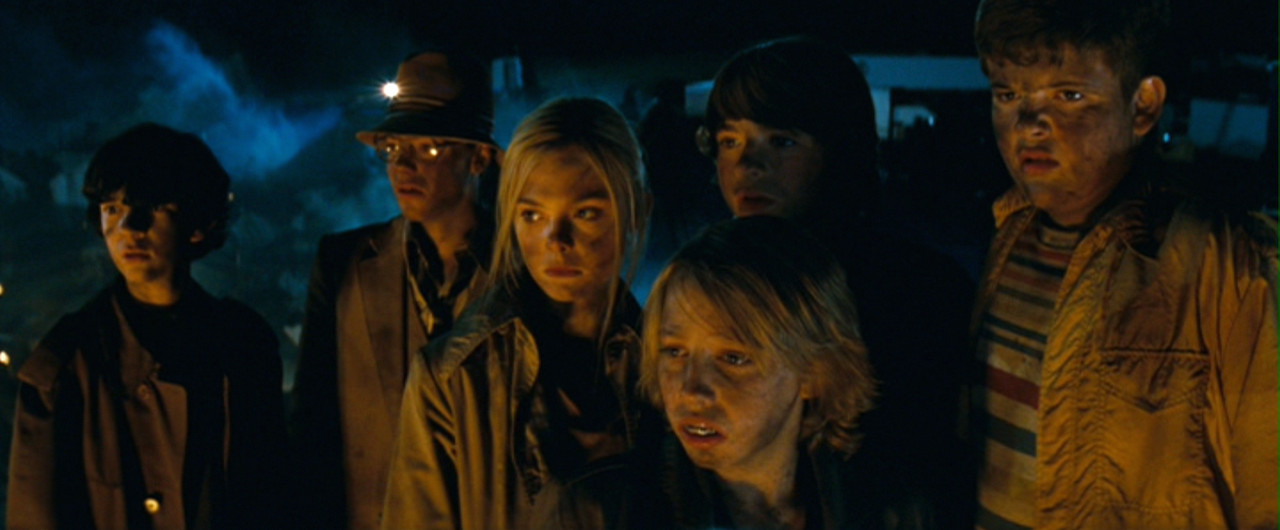
Set in an American steel town called Lillian in 1979, we meet Joe Lamb (Joel Courtney), a young boy that has just lost his mother in an accident at the plant, leaving him alone with his father Jackson (Kyle Chandler), a police deputy who has no idea how to raise his son. Cut to a few months later and school is out, which gives Joe plenty of time to hang out with his friends, Charles (Riley Griffiths), Cary (Ryan Lee), Preston (Zach Mills), and Martin (Gabriel Basso), as they work on a zombie movie. Charles is their enthusiastic director that needs a female lead and asks Alice (Elle Fanning), one of their classmates, and she agrees much to Joe’s delight as he crushes on her from afar.

One night, they all sneak out to shoot a scene at the local train station and, as luck would have it, a train goes by while they’re filming. Charles decides to incorporate it into the scene (“Production values!”), however, Joe notices a truck driving onto the tracks and it crashes head on with the train, derailing it in an impressively orchestrated scene that our heroes narrowly survive. Something emerges from the wreckage, something not of this world, that goes on to terrorize the town, crossing paths with Joe and his friends.

One of the most striking things about Super 8 is Abrams’ deft touch with the young actors in the cast. They have to carry most of the film as they are in almost every scene and so casting is crucial. This is where the film excels as evident early on when Joe applies makeup on Alice before she films a scene for Charles’ movie at the train station. It is a marvel of understated acting from these two young people. It isn’t what’s said during this moment but what isn’t as they exchange looks – too shy to say what they’re really thinking. Instead, Abrams has them convey it through the looks they exchange.

After Alice mentions that her dad (Ron Eldard) works at the mill, this triggers painful memories for Joe. He wants to say something but it is still too painful and the look she gives him suggests that she understands. Then, when Alice rehearses a scene with her co-star Martin she delivers an emotional monologue, her expressive eyes on the verge of tears. Alice captivates not just us but the other characters as well. It is an incredible bit of acting from Elle Fanning and it announced her as a young actress to watch. She has an enchanting screen presence and a knack for a light touch as evident in the scene where Joe teaches her how to act like a zombie. He’s clearly smitten with her and we are too.

Joel Courtney plays Joe as a sensitive boy coping with the death of his mother whom he was very close to and fills that void by hanging out with his friends and making a movie. Like Fanning, Courtney has very expressive eyes and uses them effectively to convey his character’s feelings. They also share the film’s strongest scenes together, giving Super 8 its heart. Both deliver emotional, heartfelt performances, playing damaged characters as a result of absent mothers. Hers left an abusive situation, his died in an accident that shouldn’t have happened. They elevate the film above its genre trappings, giving us something to care about as we become invested in their lives.

The always reliable Kyle Chandler is well-cast as the savvy deputy that quickly figures out there’s more to the train wreck than meets the eye and doesn’t buy the military’s official stance. He’s also believable as a man too busy being a cop to be a proper father until forced to when his wife dies. There is a Gary Cooper-esque quality to the actor, playing a stand-up guy that gets tired of the military lying to him and decides to do something about it. Chandler does an excellent job conveying his character’s dilemma: he has the whole town looking to him to keep them safe while also trying to be a good father to Joe. There’s a scene halfway through the film where Jack forbids Joe to see Alice and the latter finally confronts the former about how little he knows about him. Courtney is so good in this scene as Joe’s hurt feelings come to the surface.

While Joe and his friends live in Spielbergian suburbia complete with dysfunctional families and kids that dream of becoming filmmakers, Alice lives on the wrong side of the tracks with a screw-up for a father, which echoes the character of Darren in Joe Dante’s Explorers (1985), who also lives in the poor side of town with terrible parents. Abrams, however, has different cultural touchstones than Spielberg as evident with a soundtrack that features the likes of The Knack’s “My Sharona” and ELO’s “Don’t Bring Me Down.” The kids are making a zombie movie, which is an obvious reference to George Romero and Charles even has a poster of Dawn of the Dead (1979) hanging up in his room as well as John Carpenter’s Halloween (1978).

The original idea for Super 8 was, according to Abrams, to make a film about “that time in my life and my friends’ lives making these Super 8 films.” To that end, he incorporated aspects of himself in the kids. He made moves like Charles, but “felt like I experienced the world through the eyes of Joe,” while he also took apart firecrackers and blew up models like Cary. Over time, Abrams incorporated the monster movie genre into the film. Growing up, he had friends whose parents were getting divorced and was afraid that could happen to him. While working on Super 8 he came up with the idea of what if “the mother is suddenly gone and this boy didn’t have the greatest relationship with his dad, what is that relationship once she’s gone?”

While Abrams was clearly inspired by Spielberg and his early Amblin films, he didn’t want to have any overt references to his films even though posters for them would most definitely be hanging on the kids’ walls. Instead, he made Charles a Carpenter and Romero fan. The Carpenter influence extended to the structure of Super 8 itself as Abrams wanted to combine “the sweetness of the autobiographical stuff with the horror of the John Carpenter-type of conditional terror, the premise of something monstrous out there.”

Super 8 is a coming-of-age story as the lives of Joe and his friends are changed forever. They see not just their town, but the world in a different light as their lives are put in real danger and are forced to grow up. A father and son relationship lies at the heart of the film, surrounded by genre trappings. Much like he did with Cloverfield (2008), Abrams wisely waits as long as he can to reveal the alien, building suspense by expertly staging a few attacks on random people by an unseen force. The last third of the film delivers the kind of expectations that are intrinsic with this kind of big budget genre film as the alien presence becomes more overt.

Where Super 8 falls apart somewhat is the last third as Abrams relies on the traditional tropes of the blockbuster action movie as Joe and his friends engage the alien. It is here where Abrams tries to fuse Cloverfield with Close Encounters of the Third Kind (1977) and stumbles. For most of the film we are meant to fear the alien as its motives are unclear. By the end of the film it is revealed that the alien had been captured by the United States government and tortured for years, which certainly justifies the swath of destruction it leaves in its wake.

The moment, however, where Joe gives up his mother’s pendant so that the alien can complete its spacecraft and go home rings false. Through the whole film Abrams makes a point of showing how important this object is to Joe. It is the last, significant tangible link to his mother. Why he would give that up doesn’t make sense. Is Abrams trying to tell us that symbolically it means that Joe is finally letting go of the hurt and pain he feels for the loss of his mother? It hasn’t been that long and why does the alien need that particular piece of metal? There is plenty around for it to use. Abrams should have removed that bit and instead played up the fact that Joe and Alice finally connect with their respective fathers who, in turn, have settled their differences between each other. Instead, we have a decidedly bittersweet ending, which is more Abrams than Spielberg.

The commercial and critical success of Super 8 should have paved the way for more original films from Abrams but instead he went back to Star Trek and has directed two Star Wars movies, which should give him the kind of creative control that Christopher Nolan enjoys. Perhaps Abrams simply hasn’t found something personal enough to motivate him into making another original film, or perhaps the flaws in Super 8 demonstrated that he was still learning, trying to figure things out and going back to franchise movie work allowed him to not only increase his industry clout but also gave him a chance to practice with the big toys and budgets that studios provide while working out things for when he decides to do something original.


SOURCES

Billington, Alex. “Interview: Bad Robot’s J.J. Abrams – Writer and Director of Super 8.” Firstshowing.net. June 10, 2011.

Knolle, Sharon “J.J. Abrams on Why Super 8 Is His Most Personal Project Yet.” Moviefone. June 9, 2011.

Ordana, Michael. “J.J. Abrams Combines Childhood’s Wonders, Horrors.” San Francisco Chronicle. June 3, 2011.

Sciretta, Peter. “JJ Abrams Talks Super 8, Bad Robot, Lens Flares, LOST, Spielberg and the Mystery Box.” /Film. June 10, 2011.

Friday, November 16, 2018

Solo: A Star Wars Story


When it was announced that a movie featuring a young Han Solo was in the works, the Star Wars fanbase took to the Internet to complain, their collective outrage came on two fronts: the casting to Alden Ehrenreich as Han, the role originated and made iconic by Harrison Ford, and the very existence of this movie would ruin the mystique of the character. Much like the other non-saga Star Wars movie, Rogue One (2016), Solo (2018) had a well-documented troubled production with the original directors replaced midway through principal photography by Ron Howard.

While the movie garnered strong reviews, it underperformed at the box office – the lowest of any of the Star Wars movies, which led pundits to speculate that its poor performance was due to it being released too close to Star Wars: The Last Jedi (2017) and people were sick of Star Wars movies (and yet Marvel doesn’t seem to have this problem). Was it merely a matter of timing, its thunder stolen by superhero movie juggernauts Avengers: Infinity War (2018) and Deadpool 2 (2018) or were audiences simply not interested in a Han Solo movie that didn’t have Ford reprising the role? Ultimately, all of this is meaningless in the face of a much bigger question: is Solo any good?

We meet a young Han (Ehrenreich) struggling to survive on the dangerous streets of Corellia with his girlfriend Qi’ra (Emilia Clarke). They live by their wits, scamming and scheming a way off this dead-end planet. All Han dreams about is being the best pilot in the galaxy but he has very few options except for the Empire. He enlists in the Imperial Navy and finds that he doesn’t take orders too well and this lands him trouble. It also puts him in contact with two people who will be the important figures in his development as an outlaw – Chewbacca the Wookie (Joonas Suotamo), a prisoner of the Empire, and Tobias Beckett (Woody Harrelson), a veteran criminal who becomes a mentor to Han, schooling him on how to be an outlaw. They introduce the young man to an exciting and dangerous world populated by colorful characters, none of whom he can trust.

Director Ron Howard wastes no time jumping right into it as Han and Qi’ra try to escape local gangsters via an exciting hover vehicle chase that shows off not just his piloting skills but also his willingness to take chances and press his luck. That being said, Solo starts off a little awkwardly with Han and Qi’ra’s downtrodden street urchin beginnings coming off as Charles Dickens by way of Blade Runner (1982). It isn’t all that interesting but from a story point-of-view I understand its purpose. It establishes the unbreakable bond between them. They grew up on the streets together and learned how to survive by sheer cunning and wits. It also establishes Han’s legendary lousy negotiating skills. Perhaps the movie should’ve started in medias res with Han and Qi’ra on the run from Lady Proxima’s goons. It would’ve been a bolder move to just drop us right in it and establish Han’s formidable piloting skills. In addition, getting separated at the Imperial checkpoints is an excellent way of showing how close they are and how painful it is for them to be torn apart (Han giving Qi’ra his lucky dice is a nice touch) by the Empire. Although, the moment where we learn how Han got his surname is clumsy and unnecessary as it awkwardly references The Godfather Part II (1974). I do like how this scene ends – with Han alone and afraid, which is a scenario we rarely see him in.

Solo really gets going when we catch up with Han three years later fighting for the Empire and meets Chewie and Beckett. It is also a brief albeit fascinating look at the Empire from the P.O.V. of the foot soldier: they are cannon fodder in a dirty chaotic battlefield that Han is lucky to survive. As bonus to film buffs, there’s even a nice visual nod to Stanley Kubrick’s World War I film Paths of Glory (1957). Once free of the Empire and in the employ of Beckett, Han enters a bigger world and the movie opens up as well.

It doesn’t take long for Ehrenreich to slip effortlessly into the role and make it his own. He doesn’t really look like Ford and doesn’t try to imitate the actor either, but instead adopts a few choice mannerisms of the character. He captures Han’s swagger and smartass disregard for authority brilliantly and in a way that shows the beginnings of the man we see in Star Wars: A New Hope (1977). In Solo, Han still trusts people and has a sense of wonder, which Ehrenreich conveys quite well when he witnesses his first jump to hyperspace aboard the Millennium Falcon as he finally realizes his dream to see the galaxy. The actor is playing Han at an age that we never saw Ford play the character. It isn’t like Ehrenreich is replacing Ford but instead playing Han at a young age much like River Phoenix played a young Indiana Jones in Indiana Jones and the Last Crusade (1989).

When Han, Chewie and Beckett arrive on infamous crime boss Dryden Vos’ (Paul Bettany) “yacht,” Ehrenreich does some of his best work with low-key comedy as Han tries to follow Beckett’s advice only to quickly abandon it. He’s told to keep his eyes down and not look at anyone. For a few seconds he does and the actor’s slightly embarrassed look is amusing. This quickly gives way to a romantic vibe when he’s reunited with Qi’ra and Ehrenreich does an excellent job of showing the rush of emotions that play over Han’s face. This entire sequence shows Han clearly out of his depth and trying to convey a confident front. The humor comes from the brief moments where we get glimpses of cracks in this façade.

Han even comes up with an unconventional solution to the coaxium they need to get for Dryden or risk facing his wrath. The young man is bullshitting his way through the plan as fast as he can. Fortunately, Beckett and Qi’ra catch on the help flesh it out. The best moment comes when Han proposes that he’ll fly the coaxium to a refinery before it destabilizes: “We’ve already got the pilot.” Ehrenreich points to himself and flashes Han’s trademark cocky smirk. This is the moment that Han starts to become the character we all know and love. The rest of the movie sees the actor build the character of Han bit by bit, like when he first boards the Falcon and begins to adopt Han’s trademark stance, even the way Ford would lean against a doorway. These are little gestures but they all go towards building the character up.

Another inspired bit of casting is Donald Glover as Lando Calrissian, a smooth operator that knows how to invent his own luck, especially when it comes to games of chance. We meet him plying his trade: fleecing people of their money in a card game known as Sabacc. Glover exudes a cool sense of style and a confidence that is fun to watch, as is the amusing interplay with Han, most notably when they verbally spar while playing cards. Here are two arrogant smugglers facing off against each other for increasingly higher stakes. Glover is funny as Lando treats Han with whimsical condescension, much to Han’s chagrin, but his cockiness is put in check when Beckett steps in to negotiate his percentage of the take from an upcoming score.

Lawrence and Jonathan Kasdan’s screenplay invokes A New Hope and Raiders of the Lost Ark (1981) by paying homage to its roots – the old serials from a bygone era. Solo is structured as a series of cliffhangers as our heroes go from one sticky situation to another. The elder Kasdan slips right back into Han and Lando’s familiar cadences with ease, crafting a space western complete with chases, shoot-outs and showdowns.

The script also includes several character building moments between action sequences, like when Han and Chewie tell Beckett and his crew what they are going to do with their share from the loot in an upcoming score. It gives us insight into what motivates them. They’re not just mercenaries like Beckett and his crew. Han and Chewie have personal goals – the former wants to buy his own ship and go back for Qi’ra while the latter wants to free his people that have been enslaved by the Empire.

This is not to say that Solo doesn’t have its action-packed set pieces. The movie’s centerpiece is a thrilling train heist as Han, Chewie, Beckett and his crew attempt to steal a shipment of coaxium, a valuable commodity, from the Empire while also trying to fend off a gang of pirates led by the mysterious Enfys Nest (Erin Kellyman). There are plenty of tense moments as our heroes have to deal with multiple opponents whilst atop a very volatile and valuable shipment. This is the first time Han plays a pivotal role in something and he almost succeeds. He’s faced with a dilemma that forces him to take a risk or play it safe and he opts for the latter. It is an important lesson and from that point on he fully commits to being a risk-taking smuggler like Beckett who tells him, “You’re in this life for good.”

“You want to know how I’ve survived as long as I have? I trust no one. Assume every one will betray you and you will never be disappointed,” says Beckett to Han halfway through Solo. The young man replies, “Sounds like a lonely way to live.” The veteran outlaw simply tells him, “It’s the only way.” This exchange lays the down the foundation for the Han we first meet in A New Hope – a cynical smuggler that is out for only one person – himself. There’s an argument to be made that this movie is completely unnecessary and demystifies the iconic character. I understand this sentiment as I was initially resistant to this movie and the whole idea of it. Solo only sheds some light on the character of Han. There is still plenty of mystery to the character, like how does he go from this movie to what we see in A New Hope? What exactly went down between him and Jabba? Did he ever cross paths with Qi’ra again? What is Lando’s backstory? Or Chewie’s? We are only given small pieces of their story. There are so many adventures he and Chewie had between this movie and A New Hope that leaves plenty of gaps for us to use or imagination, especially since the disappointing box office results all but assures there won’t be a sequel anytime soon. Solo creates such a rich, textured world and introduces so many fascinating character that there are even more questions left unanswered about Han and his future.

I find myself enjoying these anthology movies more than the actual chapter movies. It might be that Rogue One and Solo don’t have to be too slavish to the style, tone and structure of the saga movies and this gives them the freedom to be their own thing. They also both explore the nooks and crannies of the Star Wars universe, showing us worlds we’ve never seen before and introducing us to all kinds of new characters we’ve never met. I have fond memories of reading the trilogy of Han Solo Adventures novels that came out in the late 1970s and they made me daydream about all kinds of adventures that Han and Chewie had pre-A New Hope. It was great to finally see a movie that realized those dreams and brought them so vividly to life.