"...the main purpose of criticism...is not to make its readers agree, nice as that is, but to make them, by whatever orthodox or unorthodox method, think." - John Simon

"The great enemy of clear language is insincerity." - George Orwell
Showing posts with label Gabriel Byrne. Show all posts

Friday, April 5, 2013

Miller's Crossing


Despite opening the New York Film Festival in 1990, Miller’s Crossing was buried by a tidal wave of other gangster films that year, including GoodFellas, King of New York, Dick Tracy and The Godfather Part III. They all drew some kind of buzz or hype, whether it was through controversy, awards or a massive marketing blitzkrieg. The Coen brothers’ film was a modestly budgeted film that did not contain a recognizable movie star like Robert De Niro or Al Pacino for audiences to latch onto and, coupled with a detached, distanced approach to the characters and a densely textured plot with several implicit and explicit events occurring concurrently, Miller’s Crossing became something of a cinematic oddity, a critical darling that was ignored by mainstream audiences.

Set during the Prohibition era in an unnamed northeastern city, Miller’s Crossing weaves a complex web as two warring gangs face off against each other. Leo O’Bannon (Albert Finney), a headstrong Irishman, is the gangster who controls the town, but his power is in danger of being usurped by a rival gang headed by the ambitiously violent Italian, Johnny Caspar (Jon Polito) and his silent but malevolently evil henchman, Eddie Dane (J.E. Freeman). Caught between the two sides is Tom Reagan (Gabriel Byrne), a brooding thinker and right-hand man to Leo. Tom’s only hope for survival rests in his ability to play off both men until only one side emerges victoriously.

Miller’s Crossing begins with a riff on the opening of The Godfather (1972) except that instead of a man asking for a favor and having it granted from the head of a powerful mob family, as happens in Francis Ford Coppola’s film, the man – Johnny Caspar – is rebuffed and admits that he’s not really asking, “I’m telling you as a courtesy, I need to do this thing so it’s going to get done.” This “thing” is Johnny killing small-time grifter Bernie Bernbaum (John Turturro) for letting word out on a fixed boxing match that the mob boss set up. Besides losing money, Johnny sees this as a betrayal of the highest order as evident from the monologue he delivers about ethics, which is his way of pitching permission to whack Bernie.

All Leo has to do to avoid trouble with Johnny is give up Bernie, but he refuses out of his love for Verna (Marcia Gay Harden), his girlfriend and Bernie’s sister. This decision sets everything in motion. Jon Polito acts the hell out of this scene as Johnny starts off all genial and then he comes on a bit stronger, getting indignant when Leo refuses him and then outraged when Leo tells him, “So take your flunky and dangle.” Johnny is tired of getting the “high hat” from Leo. It’s a fantastic introduction to the three main characters while also setting the story in motion.


The opening credits play over a stately tracking shot looking up through a forest of trees where the film derives its title from while Carter Burwell’s elegant music plays. Finally, a black hat comes to rest in a forest clearing, and then a gust of wind lifts it into the air sending it flying down an avenue of trees. It was the first image the Coen brothers conceived and an image that best describes the evocative, visual style of Miller’s Crossing. Aside from establishing the atmosphere for the film, the opening credits also set up a repeating visual motif of hats.

Tom Reagan is a fixer, someone who can see all the angles and spends the entire film trying to figure out how to play them for his advantage. If he has any weak spot it is an inability to kill someone when he needs to. For someone who, on the surface, shows little emotion, he has strong feelings for those close to him, namely Leo and Verna. Gabriel Byrne plays Tom as an intelligent guy who is always thinking. The actor does a great job of maintaining Tom’s poker-faced façade and uses his eyes to convey the emotions that exist underneath. Over the course of the film, Byrne shows Tom’s internal conflict of logic vs. feeling and how he resolves it to chilling effect.

Miller’s Crossing would introduce two important actors to the Coen brothers’ stable of regulars. Steve Buscemi has a small, but memorable role as Mink, a fast-talking grifter in league with Bernie, but who is also “friendly” with Eddie Dane. He would go on to have memorable cameos in the Coens’ next two films before being given a meaty role in Fargo (1996). John Turturro plays Bernie, Verna’s scheming brother and Tom’s doppelganger. He thinks he has all the angles covered, like Tom does. On the surface, Bernie is all emotion, cracking jokes and, at one point, shamelessly begging for his life, but underneath he is cold and calculated. Tom is generally a good judge of character; able to figure out someone’s strengths and weaknesses. Some people, like Leo and Johnny, are easier to read than others, while some people are more difficult, like Bernie because he’s so similar to Tom, which is why he takes the longest to figure out.

Despite playing an untrustworthy character, Turturro’s charisma gives Bernie a certain charm that is fascinating to watch, especially in the film’s signature scene where Bernie pleads pathetically for his life as Tom has been ordered to kill him out in the forest. Turturro goes to hysterical extremes so that you’re almost hoping Tom will whack Bernie if only to shut him up and silence his incessant pleading. The actor would go on to star in the Coens’ next film Barton Fink (1991) and appear in many more of theirs, always delivering memorable performances.

Marcia Gay Harden is excellent in an early role as a tough-talking dame who loves Tom despite how poorly he treats her at times. As she tells him at one point, “I’ve never met anyone who made being a son of a bitch such a point of pride.” Yet, for all of her bravado, Harden also conveys Verna’s vulnerable side when things go sour and she tries to kill Tom. J.E. Freeman has played his share of tough guys and heavies (most memorably in Wild at Heart) and cuts quite an imposing presence as the much-feared Eddie Dane. He knows that Tom is no good for his boss and can’t wait to kill him. Freeman gets his moment when the Dane takes Tom out to the forest to kill him. It really looks like Tom has finally gotten the angles wrong and Freeman’s Dane really makes you fear for the protagonist’s life.


As with all of the Coen brothers’ films, the attention to dialogue, in this case period gangster-speak, is fantastic as characters greet each other with a, “What’s the rumpus?” and throw around racial epithets like, “schmatte.” There’s the snappy back and forth banter between Tom and Verna, Bernie’s smartass pitches to Tom, and Johnny’s gangster philosophizing about ethics. The plotting is also a marvel to behold. The Coens had such a time trying to put it all together that they developed writer’s block while writing the screenplay and wrote Barton Fink before returning back to Miller’s Crossing. In addition to the escalating war between Johnny and Leo, the Coens also devised three love triangles between various characters. There’s the obvious one between Leo, Tom and Verna, however, two others are hinted at: that between Tom, Verna and Bernie, and the one between Mink, Eddie Dane and Bernie. These last two only become readily apparent upon subsequent viewings. If that weren’t enough, there are all kinds of colorful flourishes that the Coens sprinkle throughout, like the tough guy (Mike Starr) who takes off his coat and rolls up his sleeves before laying a beat down on Tom (whose reaction is priceless), or the polite henchman who roughs up Tom for owing money to his boss, only to leave him battered and bruised with kind rejoinder, “Take care now.”

That being said, the Coens did not forsake the visual pizazz of their first two films as evident in bravura scene where a team of rival gangsters tries to kill Leo in his home at night. It’s a wonderful bit of virtuoso filmmaking as Leo dispatches his killers to the strains of “Danny Boy.” For such an exciting action sequence, the rather somber rendition of “Danny Boy” gives it a decidedly melancholic vibe, perhaps hinting at the gradual crumbling of Leo’s empire. This would be the last film Barry Sonnenfeld would shoot for the Coens. He would go on to his own successful directing career. The Coens never broke stride, hiring Roger Deakins to shoot Barton Fink and he’s been there go-to cinematographer ever since.

Originally called The Bighead (a nickname for Tom), Joel and Ethan soon got lost in the intricate plottings of the story and went to stay with their good friend William Preston Robertson in St. Paul, Minnesota, hoping that a change of scenery might help. One night, they went and saw Baby Boom (1987), returned to New York City and wrote Barton Fink in three weeks before returning to the Miller's Crossing screenplay. The first image they conceived was that of a black hat coming to rest in a forest clearing, then, a gust of wind lifts it into the air. Ethan said, "I mean, the whole hat thing, the fact that it's all hats, is good, because even if it doesn't mean anything, it adds a little thread running through the whole thing that's the same little thread." Furthermore, he has said that "the hat doesn't 'represent' anything, it's just a hat blown by the wind." Joel continued, "It's an image that came to us, that we liked, and it just implanted itself." The Coens were interested in making “a film with people who were dressed in a certain manner, hats, long coats, and put them in an unusual context like a forest.”

Interestingly, the Coen brothers weren’t inspired by classic gangster films, but rather fiction of the period. After the cartoonish slapstick comedy that was Raising Arizona (1987), they shifted gears with Miller’s Crossing, a love letter to the works of Dashiell Hammett, a famous pulp writer of the 1930s. The film mixed aspects of crime and corrupt politics involved in running a city from the author’s novel, Red Harvest, with several triangular relationships and sadistic, often homoerotic undertones found in another of his books, The Glass Key. In regards to Red Harvest, Joel said, “It gave us the idea of making a movie where everybody is a gangster … Also typical of Hammett is the enigmatic central character.” The Coens first thought of gangsters in a small town and not a big city. They were also interested in putting an emphasis on ethnicity: “The more established Irish, the recently arrived Italians and the sort of outsider Jews all struggling for a piece of the pie.”


In addition to the literary influences on Miller’s Crossing, the Coens referenced several films. For example, the opening sequence with Johnny Caspar and Leo evokes the beginning of The Godfather. The climactic forest scene references Bernardo Bertolucci's The Conformist (1970). The film's final scene partially quotes the ending of The Third Man (1949) and The Long Goodbye (1973).

After the success of Raising Arizona, the Coens stayed with the same production company, which gave them between a $10-14 million budget. They decided to make Miller’s Crossing in New Orleans because they were attracted to the look of the city, as Ethan commented in an interview: “There are whole neighborhoods here of nothing but 1929 architecture. New Orleans is sort of a depressed city; it hasn’t been gentrified. There’s a lot of architecture that hasn’t been touched, store-front windows that haven’t been replaced in the last sixty years.”

Gabriel Byrne was a fan of Raising Arizona and eager to work with the Coen brothers. A casting director recommended him to the filmmakers and he was one of many actors that read for the role of Tom Reagan. The Coens originally envisioned the character to be an American, but Byrne decided to use his natural Irish accent and they liked it. The actor found Tom to be a rather enigmatic character and to keep the audience interested in him he sought to convey a vulnerable side. This was achieved in the scenes spent in his bedroom. “That’s when Tom did his thinking; that’s when Tom did his worrying; that’s when he did his plotting and his strategy.”

The Coen brothers knew John Turturro through Frances McDormand (who was married to Joel) and they had seen him in several plays. As a result, they wrote the part of Bernie specifically for him. The role of Johnny Caspar was originally written for a 55-year-old man and the Coens felt that Jon Polito was too young. They wanted him in to play the character of Eddie Dane, but he would only come in and read for Johnny. Trey Wilson, who played Nathan Arizona in Raising Arizona, was supposed to play Leo, but two days before the first day of principal photography he tragically died from a brain hemorrhage. The Coen brothers called Albert Finney in London and asked him to take on the role of Leo on two days notice. Much to their surprise, he accepted.

Miller’s Crossing received mostly positive reviews from critics. Roger Ebert gave it three out of four stars and wrote, “The pleasures of the film are largely technical. It is likely to be most appreciated by movie lovers who will enjoy its resonance with films of the past.” USA Today gave it four out of four stars and Mike Clark wrote, “Often accused of employing jazzy film school ‘tricks,’ the Coens have now gone the other way – all the way. Cold and cut to the bone, the film is a primer in screen virtuosity.” Entertainment Weekly gave the film a “B+” rating and Owen Gleiberman wrote, “Miller’s Crossing is most fun when the actors bite into their roles. Polito is superb as the gravel-voiced vulgarian Johnny. John Turturro plays Bernie with a giggly hysteria that recalls some of Richard Widmark’s desperate weasels.” The Globe and Mail’s Jay Scott hailed it as “a masterpiece, but of a unique kind. It’s a gangster movie so morally and ethically bleak, it evokes the dead-end world of the ultimate twentieth-century playwright, Samuel Beckett: lower or higher than this, you cannot go.”


In her review for the Washington Post, Rita Kempley wrote, “And Miller’s Crossing is very much a story of honor among thieves. In its hard heart of hearts, it is a masterfully written and visually unsettling study in manly love.” However, The New York Times’ Vincent Canby called it, “a movie of random effects and little accumulative impact.” Finally, the Chicago Reader’s Jonathan Rosenbaum wrote, “the double crosses are so intricate and the cynicism so enveloping that it becomes increasingly difficult to care about the characters.”

A brilliant gangster melodrama, Miller’s Crossing is arguably one of their best efforts, if not the best, with complex characters and an attention to detail that makes it one of the most atmospheric films to come along in some time. As Richard T. Jameson said in an issue of Film Comment, “It has always been one of the special pleasures of movies that they dream worlds and map them at the same time.” This is exactly what the Coen brothers do with their film by creating a living, breathing world with authentic period costumes and gangster language of the time. But like their other films, they are clearly aware of the conventions of the genre that Miller’s Crossing is set in and pay to homage to it and parody its elements simultaneously.


SOURCES

Bergan, Ronald, The Coen Brothers, Thunder’s Mouth Press: New York, 2000

Coursodon, Jean-Pierre, "A Hat Blown By The Wind," Joel and Ethan Coen: Blood Siblings, edited by Paul A. Woods, Plexus: London, 2000, pp. 91

Dudar, Helen. “Gabriel Byrne, Bound for Miller’s Crossing.” The New York Times. September 16, 1990. Pg. 19.

Goodman, Joan. “The Coen Brothers Return to the Screen with Miller’s Crossing.” The Globe and Mail. October 5, 1990.

Jameson, Richard T., “Chasing the Hat.” Film Comment. October 1990.

Levine, Josh, The Coen Brothers: The Story of Two American Filmmakers, ECW Press: Toronto, 2000.

Levy, Steven, "Shot By Shot," Joel and Ethan Coen: Blood Siblings, edited by Paul A. Woods, Plexus: London, 2000.

Friday, November 30, 2012

Smilla's Sense of Snow


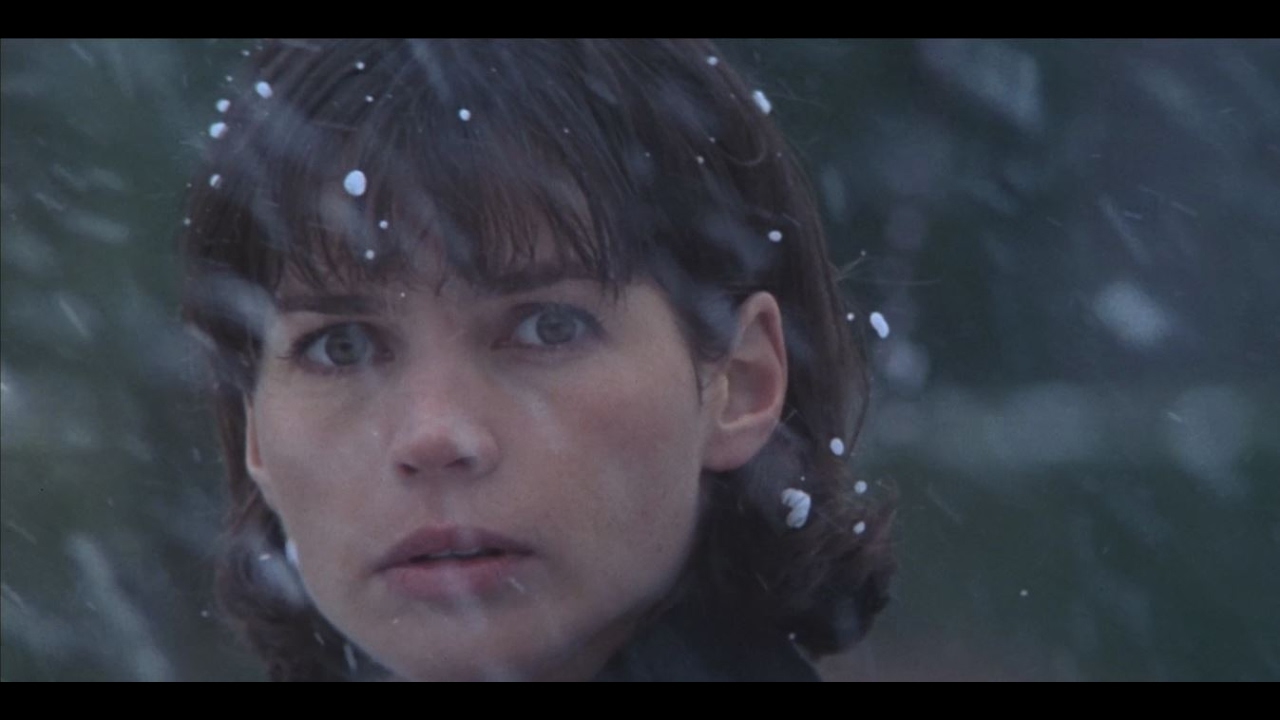
With the success of Legends of the Fall (1994), Julia Ormond briefly dabbled with the Hollywood A-list, appearing in big budget studio productions like First Knight (1995) and an ill-conceived remake of Sabrina (1995). While the former was a commercial hit, the latter was not and to be fair, both projects felt like an ill-fit for the talented English actress. Ormond parlayed whatever clout she had left and starred in Smilla’sSense of Snow (1997), an adaptation of the best-selling Danish novel Miss Smilla’s Feeling for Snow by PeterHoeg. Despite the pedigree of acclaimed director Bille August (Pelle the Conqueror) and a cast featuring the likes of Gabriel Byrne, Tom Wilkinson, Vanessa Redgrave, and Richard Harris, the film was a commercial failure and received mixed reviews. August seemed interested in making an artistic film as opposed to a standard thriller while some fans of the book felt that Ormond was miscast as the titular character. Now that some time has passed since the film’s release and there is some distance from the source material, it can be judged on its own merits.

August immediately establishes a sense of place during the opening credits that play over shots of the massive glaciers and snow-swept ice flows of Greenland. It is a cold, desolate landscape that will feature prominently later on in the film and is also the homeland of the protagonist. Smilla Jasperson (Julia Ormond) returns home from work one day to find that a little Inuit boy named Isaiah Christiansen (Clipper Miano) from her apartment building that she was friends with has fallen to his death. The authorities tell her that he was playing on the roof and simply fell off but that doesn’t jibe with what she knows of the boy. Smilla goes up to the roof and notices that his tracks in the snow go in a straight line towards the edge of the building. She is convinced that he was murdered and with a mysterious man (Gabriel Byrne), who lives in her building, that found the boy’s body, she digs deeper and uncovers a bigger conspiracy at work involving Greenland Mining and its CEO Dr. Andreas Tork (Richard Harris).

Through a series of flashbacks we see how Smilla and Isaiah became friends. They both came from Greenland and moved to Copenhagen, Demark at an early age. His mother doesn’t take proper care of him and Smilla lets him stay over, cleans him up and spends time with the boy, like taking him to the zoo. She was more of a mother to the boy then his own biological parent. These scenes quickly get us to empathize with Smilla and Isaiah while also providing strong motivation for her private investigation into his death. Their scenes together are heartbreaking and touching as we watch them with the knowledge that he is now dead. Smilla even has her moments of levity, like the scenes where she trades smartass insults with her father’s young, stuck-up trophy wife (Emma Croft).

Julia Ormond instills Smilla with an intelligence and dogged determination to solve the mystery of Isaiah that is refreshing to see. Smilla has an inquisitive nature and is methodical in her approach, which, coupled with the actress’ beauty, makes for a very attractive and engaging character. Smilla isn’t some kind of passive wallflower. She’s extremely proactive and even a bit on the abrasive side when someone rubs her the wrong way. She says exactly what she means and how she feels. It is this kind of directness in a female protagonist that is something different from what we are used to seeing in mainstream Hollywood films. However, the scenes with the lsaiah do a nice job of showing her caring, nurturing side so that she is more than a one-note character. Thanks to Ormond’s thoughtful performance, we are immediately on Smilla’s side and want to see her solve this mystery.

Cast against type, Gabriel Byrne plays an introverted man with a slight stutter. He has nice chemistry with Ormond, which makes watching their relationship develop over the course of the film a pleasant experience. Initially, Smilla is suspicious of the man and keeps him at arm’s length as one feels she does with most people she meets but they bond over their mutual friendship with Isaiah. He is a bit of an enigma and Smilla is never sure if she can completely trust him. Byrne plays it close to the vest, never revealing too much and he delivers a sensitive performance but with his trademark intensity.

Director Bille August read the first 30 pages of Peter Hoeg’s novel Miss Smilla’s Feeling for Snow and was so taken with the title character that he felt it would make a “tremendous film.” As fate would have it, Hoeg’s publisher approached August with the suggestion he direct it. The author was thrilled that his Danish novel would be made into a film by a fellow countryman. The two met briefly and discovered that they shared the same view of the story and how to depict it on film. They talked about three specific things. According to Hoeg: firstly, “the film would have to respect the book’s subtly shifting view of Greenlanders, second, “the film would have to respect the feminine outlook of the central character,” and finally “that a literal cinematic translation of the book was of no interest.”

In order to make the film version accessible to a mainstream audience, the filmmakers brought in an American screenwriter who came to Denmark and met with August and Hoeg. They went over every aspect of the story in great detail. Once they agreed on what would for the core of the film, August and the screenwriter worked on the screenplay. According to the director, the first draft was “awful, an absolute disaster.” The main stumbling block was producing a “credible image” of Smilla, who was a complex character in the novel, and conveying her thoughts. The filmmakers started over.

Screenwriter Ann Biderman first met August in 1992 and found that they shared a mutual admiration for each other’s work. He asked her to adapt Hoeg’s book but she couldn’t figure out a way to do it. She pitched her ideas anyway and didn’t get the job. She went on to write for the popular television cop show NYPD Blue in 1993. In April of that year, Biderman’s agent told her that the film’s producers did not like the first draft of a script done by someone else and would she be willing to work on it? She agreed and started in May. Biderman did a tremendous amount of research on Denmark and Greenland, spending a year writing the first draft. August liked what she wrote but felt it needed a “fresh take” and told her they were going with another writer. She went on to other projects and eventually received call from August. The director told her that he did not like what the other writer had done and wanted her back on the project. She agreed but under two conditions: that August and her would meet to focus completely on the film and that her previous draft would be the template.

To prepare for her role in the film, Julia Ormond went to Greenland and Demark with August where he showed her specific locations that were going to be used. While in Greenland, they talked to Inuit and Danish people living there, went on dog sled rides and visited local children’s homes and schools. She also took several photographs of places and people in order to get a sense of what life was like there. She also worked closely with the costume designer to find outfits that would showcase the hybrid of Smilla’s Danish and Greelandic sides of her. On the opposite end of the spectrum, Gabriel Byrne was not crazy about doing research for his role as he believed that “every role an actor plays is basically playing himself.” He had read the novel and loved it when it first came out but his only preparation was to study the script. The actor had no problem replicating the stutter of his character as he used to stutter as a child.

Principal photography began on March 4, 1996 on location in Copenhagen. The first week’s filming had to be scrapped because August and Ormond struggled to convey Smilla’s “clear-sightedness and her skeptical view of the world in which we live, without making her seem arrogant and superficial,” the director said in an interview. Ormond remembers, “It was an isolating experience. Bille didn't like it when I smiled on screen, and I agreed with him—Smilla's more inscrutable than that. But it makes you depressed. I had to shut down something inside me to play her that way.So, they toned down her abrasiveness. The actress showed an incredible commitment to the project, even doing her own stunts, which included the scene where Smilla escapes from a sinking ship on fire.

The production moved on to Greenland where cast and crew were at the mercy of extremely cold conditions, which meant that reels of film had to be wrapped in warm blankets in order to keep it from cracking in the camera. After filming finished there, the production went to Sweden where the climactic showdown in the ice cave was done. Instead of trying to build one on a soundstage, the producers found a hotel in the northern part of the country that was built and carved entirely out of ice. They utilized skilled craftsmen who built the hotel to work on the cave.

Smilla’s Sense of Snow received mixed reviews from critics. Roger Ebert gave it three out of four stars and liked it despite the weak ending: “The ending simply doesn't matter. The movie presents it, but isn't implicated in it. The movie is off somewhere else … In our world movies need a plot, I guess, and so this one has one. Ignore it. It's irrelevant to the movie's power.” In her review for The New York Times, Janet Maslin praised Ormond’s performance: “The film has an elegant Smilla in Julia Ormond, whose remoteness works better here than it has in other roles. Ms. Ormond plays Smilla in the chic, alert, unsmiling fashion of a French film star, and she richly rewards the camera's many beautiful close-ups of Smilla cogitating on crime.”

However, Entertainment Weekly gave the film a “C-“ rating and Lisa Schwarzbaum wrote, “But on the screen, with a somnambulant Julia Ormond moping in the lead and a morose Gabriel Byrne as the mechanic working from an elliptical script by Ann Biderman (Primal Fear), there's nothing but Bondishness; nearly all sense of personality has been stripped, leaving only striking panoramas of ice, and plenty of it, to suggest desolation, longing, fear, despair — all the human bits that make obsessions interesting.” The Los Angeles Times’ Kenneth Turan wrote, "Though enlivened by occasional touches, Smilla's is like the food at Taco Bell: exotic only to someone who hasn't experienced the real thing.” Jonathan Rosenbaum found the film to be “a watchable conspiracy thriller, but, as with most conspiracy thrillers, the first half is a lot more watchable than the second: the more one discovers, the less interested one becomes.”

August elevates what could have been merely a serviceable, by-the-numbers thriller into something that is virtually non-existent nowadays – a smart, thought-provoking film for adults with an intelligent protagonist determined to avenge a loved one at the risk of her own safety. Smilla’s Sense of Snow does lose its way a bit in the last third where Smilla makes a jarring transition from investigator to full-blown adventurer but the rest of the film is so strong, so assured in its direction, acting and writing that I was able to overlook the implausible nature of its conclusion.

August’s direction is a little on the clinical side, as if mirroring the cold environments of Copenhagen and Greenland during Christmastime when the story is set. It is Ormond’s performance that provides the film’s warmth and heart as Smilla’s love for Isaiah fuels everything she does. It is hard not to get caught up in her investigation, especially when the stakes are raised and her own life becomes increasingly in danger. Smilla’s Sense of Snow was miles apart from the soap opera theatrics of Legends of the Fall or the misguided remake of Sabrina. Ormond finally found a role tailored to her intelligence, playing a fiercely independent character. Sadly, despite being based on a best-selling novel, Smilla’s Sense of Snow did not connect with a mainstream audience and was a commercial failure, which may have hurt her career. She has yet to headline another high-profile film but has taken supporting roles in significant films by the likes of David Lynch (Inland Empire), David Fincher (The Curious Case of Benjamin Button) and Steven Soderbergh (Che). Bille August’s film is one that deserves to be rediscovered and re-evaluated as an under-appreciated thriller that works despite its third act problems.


SOURCES


Trolle, Karin. Smilla’s Sense of Snow: The Making of a Film. Noonday Press. 1997.

Thursday, February 10, 2011

Michael Mann Blogathon: The Keep

BLOGGER'S NOTE: This post is a part of the Michael Mann Blogathon going on over at the Seeti Maar - Diary of a Movie Lover blog. If you get a chance, check it out as there are all kinds of amazing contributions so far.

Let’s get this out of the way – The Keep (1983) is not a good film. It is, at times, an interesting one that has its inspired moments, but it is a narrative mess with lackluster performances. It is the equivalent of David Lynch’s Dune (1984) – a big budget folly beset by production problems and an uncaring studio that butchered the film before its release. And like Lynch, the experience was so painful for Michael Mann that he has never revisited it since. It’s all George Lucas’ fault. The success of Star Wars (1977) motivated all kinds of directors to dabble in the science fiction, horror and fantasy genres. For example, in the year The Keep was released, Peter Yates directed Krull, John Carpenter and David Cronenberg tackled Stephen King adaptations with Christine and The Dead Zone, respectively, Tony Scott’s directorial debut was the gothic vampire tale The Hunger, and there was also Something Wicked This Way Comes. These films, however, were overshadowed by the third installment of the Star Wars trilogy, Return of the Jedi, which dominated the box office.


After Thief (1981), Mann was offered all kinds of urban crime films. He was not interested in repeating himself and wanted, instead, to do something like Gabriel Garcia Marquez’s One Hundred Years of Solitude that would allow him to make a film that was “non-realistic and create the reality.” He worked briefly on the screenplay for Jim McBride’s Breathless (1983) but left that project to make The Keep, an adaptation of F. Paul Wilson’s novel about a mysterious force within a Nazi fortress. The film begins with a transition from a black screen to blue sky and then pans down to the action. Mann would do the exact same thing at the beginning of Manhunter (1986) three years later. As is typical with the beginning of a Mann film, the opening sequence is devoid of dialogue. A convoy of trucks filled with Nazi soldiers drive through desolate countryside. They arrive at a small village in the Dinu Pass in the Carpathian Alps in Romania circa 1941. The town’s inhabitants look at these intruders suspiciously. Out of the fog, the convoy arrives at the Keep, which is to be their new base of operations. The commanding officer, Woermann (Jurgen Prochnow) proudly proclaims to a subordinate, “Now we are the masters of the world. Doesn’t that enthrall you?” The irony of this statement is that it is said before the Nazis invaded Russia and failed.

The Keep is a massive, imposing structure. Mann used vintage arc lamps from the 1920s and 1930s to get “a certain kind of hard blue shaft of light coming through all the openings in the keep.” The village outside of the Keep was shot with very bright light and in white in order to represent innocence. However, something is not quite right and this is symbolized by the fact that none of the rooftops are symmetrical. In contrast, everything inside the Keep is dark. Mann said, “We exposed for the highlight and let all the shadows go. Instead of a flood or a wash of light, there are very defined shafts of light. It’s only in those shafts that we can see things.”

Father Fanescu (Robert Prosky) is the caretaker of the Keep and warns Woermann that he and his men should not stay inside the structure because bad dreams drive out people who attempt to stay too long. Naturally, Woermann scoffs at such notions. He is an overconfident antagonist like Leo in Thief, Waingro in Heat (1995) and Thomas Sanderford in The Insider (1999). Fanescu also warns them never to touch the many metal crosses embedded in the walls. Of course, two greedy soldiers on night watch try to pry one out, believing that it hides some kind of treasure. In doing so, they uncover the vast interior of the Keep and a powerful force that kills them. They have unknowingly awakened a being known as Molasar (Michael Carter). This even awakens a man by the name of Glaeken (Scott Glenn) who lives in Greece. He quickly packs his things and goes to Romania. This man is a loner, much like other Mann protagonists. He is a man of few words, driven by intensely personal reasons to do what he does.

Reinforcements arrive led by a vicious officer, Major Kaempffer (Gabriel Byrne) who starts killing villagers in retaliation for the mysterious deaths of five soldiers. He finds inscriptions on a wall in a language that none of them can decipher but Fanescu knows of a scholar who can – Dr. Cuza (Ian McKellen). He and his daughter Eva (Alberta Watson) are summoned from a concentration camp. When two soldiers try to rape Eva, they are eradicated by Molasar and enveloped by smoke. In comparison to the cold, calculated Kaempffer, Woermann seems much more reasonable. He is smart enough to fear this unknown force and has enough compassion to send Eva to the local inn. Kaempffer is weak of mind, like Freddie Lounds in Manhunter and Van Zandt in Heat. Kaempffer thinks too rationally and deludes himself into believing that he is in control.

For Molasar, the more it kills the more of a physical presence it has. It makes a deal with Dr. Cuza that if he carries out the talisman that keeps it imprisoned in the Keep, Molasar will kill all of the soldiers. However, Glaeken knows that if Molasar is released, it will destroy the world. Glaeken is not just a traveler, as he describes himself, but also watches over the Keep and makes sure that Molasar does not get out.

As the film builds towards its climax, Woermann confronts Kaempffer and tries to appeal to his conscience one more time:

“All that we are is coming out, here in this Keep. And what truth do you see, what are you discovering about yourself, Kaempffer? I murder all these people. Therefore I must be powerful. Smash them down because only that raises you up. It’s a psychotic fantasy to escape the weakness and disease you sense in the core of your soul ... You have released the foulest that dwells in all men’s minds. You have infected millions with your twisted fantasies. And formed millions of diseased mentalities that worship your twisted cross.”

This is not only an indictment of the Nazi philosophy but also the godlike mentality alluded to by Hannibal Lecktor to Will Graham in Manhunter. Dr. Cuza has become corrupted by power like those he hates – the Nazis. When Molasar heals him of his diseased state, he loses sight of what is good and evil.

Producers Gene Kirkwood and Howard W. Koch, Jr. optioned F. Paul Wilson’s book for Paramount. Not surprisingly, Mann was not interested in a straightforward adaptation. He did not want to make a traditional horror film. As he said in an interview at the time, “What it is overall is very dreamy, very magical, and intensely emotional.” Mann admired fairy tales and was drawn to Wilson’s best-selling novel as a way to make a fairy tale movie for adults.

The filmmaker did not use Wilson’s book as his starting point, but it was actually a meeting with Otto Skorzeny in 1969. Skorzeny was a former member of the S.S. and one of World War II’s most successful commandos. He led the raid that rescued Benito Mussolini from Italy in 1943. At Nuremberg, Skorzeny successfully defended himself and was acquitted. After the war, he ran a mercenary operation out of Spain. Mann was fascinated by Skorzeny’s psychology. Mann said in an interview that “the overt politics interest me less than the states of mind: the specific kinds of aberration that explain why a lower middle-class bourgeois in Munich would be attracted to the Waffen SS in 1933.”

Mann also read The Walter Langdon Report, a document commissioned by the Office of Strategic Services to psychoanalyze Adolph Hitler. Walter Langdon was a New York doctor who had talked to many people that knew the dictator before the war. This portrait of Hitler and how he reflected the psychosis of whole nation fascinated Mann. Another primary influence on the film was Bruno Bettelheim’s The Uses of Enchantment, which posits the theory that fairy tales were complex morality fables. Bettelheim argues that myths have clearly defined heroes and usually end in tragedy, while fairy tales were universal with happy endings. It goes on to propose the theory that most enduring children’s stories do not teach moral messages as fables do but deal with action and horror in a way that allows children to deal with real world horror over time.

Mann first scouted locations in Romania but was unable to find a mountain pass of black rock in Pyrenees or the Alps. He then asked experts at a nearby university to use their geology computer to help him find the location he wanted. With the help of production designer John Box, Mann found an abandoned slate quarry in Wales. The quarry was 150 feet deep and a lift or a crane had to take people in and out. Cinematographer Alex Thomson placed his lights on cherry pickers around the edge of the quarry and at one point 80 miles per hour winds threatened to knock the lights in.

Mann first wrote the screenplay and then made additional changes while shooting the film. “Now the words are plastic, flexible,” Mann remarked in an interview at the time. He constantly rewrote dialogue before shooting which frustrated his actors. Two days before a scene was shot the actors would get new pages. Then, a day before they got additional new pages. Mann storyboarded the entire film only to get on the set and realize that the lighting was different and so he threw them out, opting instead to work on a more instinctual level. On the set, Mann listened to the music of Tangerine Dream and Laurie Anderson. He was particularly taken with Anderson’s vocal stylings and wanted Glenn to speak like she does in her songs.

By certain accounts, the shoot was a particularly grueling one. The crew worked 16-18 hour days in cold, rainy weather. In particular, make-up artist Nick Maley remembers that he had to change make-up effects three times in one week. He claimed that Mann did not listen to more experienced crew members and that eight of them suffered nervous breakdowns as a result of the film’s demanding schedule. Maley also claims that he was exhausted a lot of the time from the miscommunication he experienced with Mann over prosthetics for Glaeken. Six weeks into filming, Mann changed the color of Molasar’s final costume, which meant some scenes had to be re-shot.

Mann described Molasar as the essence of “just sheer power, and the appeal of power, and the worship of power, a belief in power, a seduction of power.” This is a description that could easily apply to future Mann antagonists, Francis Dollarhyde and Hannibal Lecktor in Manhunter. Mike Carter played Molasar and spoke highly of Mann: “His direction was simple and clear—always the best. The physical presentation of Molasar was always carefully worked out. The way in which I played Molasar was pretty much my decision. Obviously he would have changed things if he didn’t like it.” However, Carter was not blind to the problems that Mann faced on the film: “We went over budget and over schedule, but he was trying to make a particular kind of film, almost a German Expressionist movie, and I’m not surprised it was as long and expensive as it was. It needed to be a big-budget movie.”

There was a six-month delay because of the death of special effects expert, Wally Veevers two weeks into post-production, forcing Mann to rethink the film’s effects after the cast and crew had departed. Without Veevers to provide the needed opticals for Molasar, the creature resembled the Michelin Man as opposed to an ominous force of evil. To make matters worse, Veevers had not made any storyboards for his vision of the movie and no one knew his methods. The production went over schedule by 22 weeks and tens of millions of dollars.

When it came to the finale, Mann chose between two different endings. Glaeken versus Molasar in the dark cave of the Keep or on its summit. The director went with the former but was forced to scale it down. Originally, he had wanted a more visually elaborate, ending with Glaeken fighting Molasar with a giant laser coming from the Keep that evolved into something akin to 2001: A Space Odyssey (1968). After Veever’s death, Paramount did not give Mann enough money to finish the film and he had to abandon certain sequences. French artist Enki Bilal was brought in to help design Molasar. He traveled to Shepperton Studios five or six times and felt that the film was ruined during the editing process. Special effects make-up artist Bob Keen felt that one of the biggest problems was the long, grueling shoot and that by the end of it a lot of the crew members had left.

The current version of the film runs 90 minutes but rumors say that the rough cut ran over two hours. The Keep was released on December 16, 1983 in 508 theaters, grossing $1 million in its opening weekend. It went on to make $4.2 million in the United States and was a commercial and critical failure. In his review for Time magazine, Richard Corliss wrote, “It boasts some pictures as pretty as any to be seen on a gallery wall, and, in narrative terms, it is a mess.” Vincent Canby, in his review for The New York Times, wrote, “The movie makes no sense as either melodrama or metaphysics, so that its expensive special effects go up in smoke. Literally ... At the screening I saw, the film's soundtrack, as stuffed with talk as with ominous sounds and music by Tangerine Dream, was so sibilant that I longed to stuff cotton in my ears or, at least, to hear a character who lisped.” At the time, Mann felt that The Keep was “emotionally deeper because it tries to get at the way you think and feel in the way dreams work.” However, after many years had passed, Mann admitted, “The Keep was really hard because I did something I swore I’d never do again. And that is that I went into pre-production without a completed screenplay.”

Author F. Paul Wilson joined in on the critical bashing of Mann’s film and dispelled the rumor that it might have been the victim of studio interference. “The film followed his (bad) script pretty faithfully. He simply decided that he wouldn’t mention the word ‘vampire,’ anywhere in the film. Of course, that’s the major red herring in the story.” Wilson felt that Mann did not understand the novel or how to adapt it. “He did not build character. He did not tell a coherent story. When I read the script, I wrote to him and I pointed out all of this to him in a very gentle, non ego trampling way, I thought. But he ignored me.” To put it mildly, Wilson was not happy with Mann’s film as he commented in an interview, “the dialogue was wooden, dumb, phony and stupid. And the direction, all those pregnant pauses ... And I would have chucked that stupid looking monstrosity that passed for Molasar. What a joke!” However, like what happened to Lynch after the soul-crushing failure of Dune, Mann went back to familiar subject matter and ended up making one of the best films of his career, Manhunter. I admire Mann’s ambition to tackle a new genre for him at the time but he was clearly out of his depth and it shows in the final film. Since The Keep he has wisely stuck to his strengths – urban crime films and historical biopics.

Also, check out this excellent analysis of the film over at the Wonders in the Dark blog and this comprehensive fan site.