"...the main purpose of criticism...is not to make its readers agree, nice as that is, but to make them, by whatever orthodox or unorthodox method, think." - John Simon

"The great enemy of clear language is insincerity." - George Orwell
Showing posts with label Janeane Garofalo. Show all posts

Friday, June 9, 2017

Mystery Men

Batman and Robin (1997) has often been credited with killing off the comic book superhero movie for a few years. Admittedly, nothing much of any merit had been released until Bryan Singer’s first X-Men film in 2000. Studios, clearly wary of not repeating the financial disaster of Joel Schumacher's bloated opus, had stayed away from mounting any large-scale production – case in point: the scrapping of a Superman movie despite having director Tim Burton and actor Nicolas Cage attached to it. Therefore, the mounting of Mystery Men (1999), yet another super hero film based on a comic book, seemed like a risky venture with a $68 million price tag, and which ended up only making back less than half of it. Looking back, it’s not hard to see why. Mystery Men is such esoteric oddity – the costumed superhero equivalent of The Adventures of Buckaroo Banzai (1984).

Based loosely on Bob Burden's Dark Horse comic Flaming Carrot Comics, Mystery Men focuses on the misadventures of a bunch of inept super heroes: Mr. Furious (Ben Stiller), The Shoveler (William H. Macy), and the Blue Raja (Hank Azaria). They've got the costumes and the shtick down cold, the only problem is that none of them actually has any super powers. Furious merely works himself into an angry rage, the Shoveler... well, has his shovel, and the Blue Raja hurls cutlery with awful accuracy. Hardly, the Justice League of America. The REAL super-powered hero, Captain Amazing (Greg Kinnear) is so good that he not only has vanquished every bad guy in Champion City but he has also snagged every corporate sponsor on the planet (his costume is decorated with logos of everything from Pepsi to Reebok). The problem is that he has no one left to fight and is in danger of losing his precious sponsors. He hatches a plan to free his arch-nemesis, Casanova Frankenstein (Geoffrey Rush) but it backfires and Amazing finds himself at the mercy of his old foe. Naturally, it's up to Furious and his friends to become organized and stop Frankenstein before it's too late.

Director Kinka Usher sets a wonderfully eccentric tone right from the get-go as a gang known as the Red Eyes (whose ringleader is comedian Artie Lange no less) busting up a senior citizens soiree to steal their false teeth, artificial limbs, and so forth. Naturally, Furious and his pals are completely ineffectual and Captain Amazing swoops in and saves the day only to then be immediately whisked away by his publicist (played by renowned illusionist Ricky Jay).

After Batman and Robin the only direction the super hero movie could possibly go was into self-parody (Schumacher's film tried and failed to do this). Mystery Men wisely opts for this approach, complete with a corporate whore Superman clone (Captain Amazing) and a whole slew of absurdly named heroes that include the likes of The Waffler (complete with a syrup sidearm), the Spleen (“Pull my finger!”), and the PMS Avenger (who only works a few days every month). Mystery Men even goes so far as to set all the action in a glossy, neon urban landscape a la the Batman movies but where they degraded into art direction and style over substance, this movie maintains a good balance of stunning visuals and interesting characters.

What really makes these characters so fun to watch is the actors that play them. Ben Stiller is quite decent as a guy who thinks he’s tougher than he really is and always trying to prove himself to others, trying too hard, which gives off a whiff of desperation. Conversely, Greg Kinnear nails Amazing’s air of smug superiority and complete lack of empathy for those he’s sworn to protect.

Hank Azaria, a character actor with a flair for accents, sports an outrageous faux-British accented as the Blue Raja, a mama’s boy with pretensions of fighting crime. Casanova’s henchmen are known as the Disco Boys, which means that every time they appear on-screen they’re accompanied by disco music. Comedian Eddie Izzard plays one of them and so we get to see him do his best Saturday Night Fever (1977) dance impersonation and a defiant attitude as he refuses to believe that disco is dead.

Geoffrey Rush has delicious fun playing an evil super genius complete with a vampy Eurotrash accent. He and Kinnear banter back and forth in an amusing scene as their smug egomaniac characters try to outdo one another. Rush, in particular, is a delight as he over-enunciates his dialogue, employing dramatic pauses between phrases. Claire Forlani, who was briefly a cinematic “IT” girl during the 1990s, appearing in notable films like Mallrats (1995) and Basquiat (1996), turns up as Furious’ potential love interest but thankfully isn’t given much to do.

To see the likes of Janeane Garofalo and William H. Macy – two actors you wouldn't normally associate with being in a costumed super hero movie – running around fighting bad guys in outrageous costumes is truly a delight to behold. Her first appearance in the movie sees her character bicker with Furious. Frequent collaborators during the ‘90s, it is a delight to see them playfully take potshots at each other like bratty siblings.

Best of all, Tom Waits appears as a mad scientist who only invents non-lethal weapons (i.e. canned tornado). His first appearance in the movie is almost worth the price of admission alone. In an inspired bit of casting, Wes Studi (The Last of the Mohicans) portrays the enigmatic hero The Sphinx who acts a wise sage mentor to the ragtag group. The veteran actor usually doesn’t appear in goofy comedies like this one, which is too bad as he is an excellent straight man, giving his quasi-Yoda-type wisdom an amusing faux-gravitas, while looking ridiculous in his crime-fighting costume.

You have to admire a movie that features cameos by film director Michael Bay as the head of a gang of frat boys (“Still on probation for lethal hazing!”) and CeeLo Green as part of a rapping gang of criminals. As more of these disparate personalities show up I began to wonder how Usher got all of these people in one movie? He came from the world of television commercials and Mystery Men was his shot at the big time for studio filmmaking. Sadly, he was not prepared for the rigors of working within the confines of Hollywood and had difficulty fusing CGI effects work with making a comedy. Hank Azaria shed some light on the trouble involved in working on the movie: “It was tough. It was really like trying to be funny in the middle of a math equation or something…Very long hours, very stressful and tough on the set.” The actor hints that Usher didn’t have a clear vision for what he wanted the movie to be and clashed with the producer and some of the cast who all had their own ideas about what it should’ve been. It got to the point where Usher told Azaria the middle of principal photography, “I’m going back to commercials when this is done. I’ve had enough. I’d much rather do my cool little one-minute shorts that I make than deal with all this nonsense.”

Mystery Men received mixed to negative reviews from critics with Roger Ebert leading the charge with his two out of four star review: “Comedy depends on timing, and chaos is its enemy. We see noisy comic book battles of little consequence, and finally we weary: This isn’t entertainment, it’s an f/x demo reel.” In her review for The New York Times, Janet Maslin wrote, “The jokes are smart in the screenplay by Neil Cuthbert, but they are allowed to wear thin despite the brief running time.” Entertainment Weekly gave it a “B-“ rating and Lisa Schwarzbaum wrote, “Call Mystery Men a sketchbook in search of a movie; it’s still a super idea in a summer of flackery.” In his review for the Los Angeles Times, Kenneth Turan wrote, “For watching Mystery Men is a bit like sitting next to a brilliant person at a dinner party who just won’t shut up. Because this film is so self-conscious and, like Mr. Furious and friends, has a tendency to try too hard, it’s an effort you end up admiring more than completely loving.” Finally, the Washington Post’s Michael O’Sullivan wrote, “As incisive as a loud, wet raspberry and about as full of topical gravitas as the Dark Horse comic book on which it’s based…Mystery Men is one half of a very funny movie, and as we enter these dog days of August, half a funny movie is better than none.”

If anything, Mystery Men suffers from the same problem as Batman Returns (1992), in that it has too many colorful, intriguing characters and not enough time over its 120 minutes to develop all of them. With something like seven main characters, it often feels like some of their motivation for certain actions was left on the cutting room floor. For example, we have no idea how Mr. Furious, the Shoveler and the Blue Raja find Invisible Boy; they just show up at his door one day. This is just sloppy editing and pacing. However, it is credit to the actors that their performances are what hold this movie together. While the satirical elements of Mystery Men are nothing new if you've seen or read the fantastic comic book/cartoon, The Tick, it is still an entertaining, enjoyable movie.


SOURCES


Harris, Will. “Random Roles: Hank Azaria.” The A.V. Club. September 14, 2011.

Friday, February 3, 2012

Titan A.E.

Anticipation was high for Titan A.E. on the eve of its release in June 2000. Scripted by Ben Edlund, Joss Whedon (the creative braintrust that would go on to make the Firefly television show) and John August, and directed by maverick former Disney animator Don Bluth (The Secret of NIMH) and Gary Goldman (An American Tail), it was a space opera in the tradition of the Star Wars films. Titan A.E. ambitiously combined hand-drawn animation with computer-generated imagery and was touted as the first major motion picture to be projected digitally. Unfortunately, the film was badly marketed with the general public unsure if it was intended for children or for an older science fiction audience. It didn’t help that at the time Bluth stated in an HBO First Look special that his film wasn’t a cutesy kiddie musical but rather a non-stop action film. Titan A.E. received mixed critical reviews and flopped badly at the box office, resulting in the closing Fox Animation Studios. It was also the last feature film Bluth and Goldman would helm. It’s a shame really, as the film features gorgeously rendered animation, engaging characters and an engrossing story.


It is 3028 and humanity is working on the Titan project, a groundbreaking experiment that promises to unlock our full potential. However, an energy-based alien race known as the Drej feel threatened by this project and proceed to destroy Earth in order to stop it. Professor Sam Tucker (Ron Perlman) is an important scientist with the project and as the aliens attack, he puts his five-year-old son Cale on a spacecraft that barely manages to escape. Unfortunately, Sam isn’t so lucky. It’s a pretty ballsy move to begin the film with the destruction of the Earth and the death of the protagonist’s father. It sends a strong message that this isn’t going to be some wishy-washy children’s animated film. It’s a spectacular sequence that basically says all bets are off in this film. Titan A.E. flashes forward 15 years later and Cale (Matt Damon) has grown up and is working as a mechanic on a salvage station in outer space. He’s bit of a reckless screw-up lacking direction in his life.

During one of his lunch breaks, Cale is saved from being beaten up by two aliens by a fellow human named Korso (Bill Pullman), who offers him a chance to join a very dangerous mission. Korso worked with Cale’s father on the Titan project and wants to find the spacecraft in order to unlock its secrets. The Drej arrive and Cale and Korso narrowly escape in an exciting action sequence that ends with them being shot into outer space. Cale joins Korso and his crew – his pilot Akima (Drew Barrymore), the alien first mate Preed (Nathan Lane), the gruff weapons expert Stith (Janeane Garofalo), and Gune (John Leguizamo), the ship’s eccentric scientist. There are brief lulls between exciting action sequences as the Drej relentlessly pursue our heroes.

The first Star Wars film is an obvious influence on Titan A.E. with Cale as the young, brash Luke Skywalker-esque pilot, Korso as the sarcastic Han Solo-type rogue, and Akima, a tough, Princess Leia-esque heroine with Stith as the Chewbacca surrogate. In some respects, Titan A.E. also feels like a warm-up for Firefly as writers Joss Whedon and Ben Edlund were beginning to work out the archetypes of the crew of the Serenity with the motley crew in this film. Korso anticipates Jayne, Akima contains elements of Kaylee, and Cale exhibits a few characteristics of Malcolm Reynolds. Not to mention, the enigmatic and ruthless Drej predict the equally mysterious and vicious Reavers in Firefly.

The voice casting is excellent with Matt Damon’s youthful sounding voice perfect for the energetic Cale, Bill Pullman’s weathered voice is ideally suited for the grizzled, veteran warrior Korso, and Drew Barrymore’s expressive voice helps bring the feisty Akima to life. The mix of hand-drawn animation and CGI is impressively rendered as they combine to create some eye-popping visuals, helping realize the film’s epic scope. It is fluid and rich in detail – there is so much to look at in each and every frame. Titan A.E. features a galaxy populated with exotic planets, like Sesharrim with its brown hydrogen trees and red sky where our heroes encounter a bat-like race known as Gaoul. This is contrasted with the cool, metallic blue of the Drej homeworld that resembles a funky hybrid of the computer world from Tron (1982) and the Borg mothership from Star Trek: The Next Generation.

Producer David Kirschner first brought what would become known as Titan A.E. to 20th Century Fox as a live-action film, “a sort of Treasure Island in outer space.” It was in development for more than five years and originally known as Planet Ice. It was initially conceived as a live-action feature but Fox decided it would be more interesting and less expensive to produce as an animated film. Known for creating successful animated films like An American Tail (1986), The Land Before Time (1988), and Anastasia (1997), Don Bluth and Gary Goldman saw this project as quite a departure in terms of look, subject matter and target audience. Once they came on board in 1998, it was re-titled Titan A.E.

At the time, Fox was determined to compete with Disney in the feature animation field by spending millions of dollars on groundbreaking CGI technology and told Bluth and Goldman to make a film that featured innovative visuals and effects. The first thing the two men did was redesign the entire film. According to Goldman, the film was originally going to be 40% CG but ended up closer to 90%. He wanted to get a 3-D look while still maintaining a cartoon feel. He and Bluth were aware that their target audience – adolescent boys – were generally not into animated films and decided to adopt a darker, moodier color palette.

In another effort to appeal to teenage boys, the studio enlisted Grammy award winning producer/songwriter Glen Ballard who populated the soundtrack with contemporary bands like Lit, Jamiroquai and Luscious Jackson to complement composer Graeme Revell’s electronic music score. The $55 million film was a risky venture for the animation department of Fox whose fate rested on its success or failure. However, a year before the film was finished, Fox laid off 300 out of 380 of its animation staff members leaving very few people to make the film. An early test screening in Orange County went well with several teenagers comparing Titan A.E. favorably with Star Wars. However, Bill Mechanic, head of Fox, left the studio and Fox Feature Animation was shut down. Bluth and Goldman left and Titan A.E. died a quick death at the box office.

Titan A.E. was the first Hollywood film to be digitally transmitted across the United States over the Internet and then digitally projected into cinemas. The film was pummeled by critics that, with a few exceptions, slammed it as being a Star Wars rip-off. The New York Times’ Stephen Holden wrote, “Titan A.E. tries to pack so much into 90 minutes that the characters don't have enough screen time to engage our emotions. Cale and Akima in particular have all the depth of television spinoffs of Luke Skywalker and Princess Leia. This is not to say that Titan A.E. isn't entertaining in its breezy, mild-mannered way, only that its mythology and characters barely resonate.” In his review for the Globe and Mail, Liam Lacey wrote, “Think of it as Noah's Ark, with a few plot changes inspired by the Space Invaders video game.” Entertainment Weekly gave the film a “C” rating and Owen Gleiberman wrote, “The traditional cartoon elements of Titan A.E., both the story and visuals, are unutterably bland. Cale has been conceived as the sort of blond Matt Damon action figure you'd expect to get with a Happy Meal.” In his review for the Washington Post, Desson Howe wrote, “This story's relatively lofty ideas about saving the human race, and its endless twists and turns, are going to soar over the heads of many young audiences—and probably bore them, too. The scenario and special effects are too lackluster for slightly older, sensation-hungry kids, presumably the target audience. And the humor is far too lame for the parents in the audience. Which makes Titan a must-see for . . . almost no one.” USA Today gave the film two and a half out of four stars and Mike Clark called it, “visually impressive but woefully dumbed-down.”

However, Roger Ebert gave the film three and half out of four stars and wrote, “One test for any movie is when you forget it's a movie and simply surf along on the narrative. That can happen as easily with animation as live action, and it happens here. The movie works as adventure, as the Star Wars pictures do.” In his review for the Los Angeles Times, Kenneth Turan wrote, “Titan A.E.'s rudimentary narration does work up a certain amount of propulsion. But it's not the story that's the story here, it's the film's bravura visual look.”

Titan A.E. is about the survival of the human race and what it means to be human with Cale learning to appreciate his heritage. Along the way he grows and falls in love. The film is also a rousing action/adventure tale with a vivid color scheme, larger than life characters that must face a seemingly undefeatable foe. Admittedly, Titan A.E. isn’t reinventing the wheel in terms of originality but it also isn’t trying to, instead delivering an entertaining ride on that level it certainly succeeds.


SOURCES

Dawson, Angela. “Fox Hoping for Titanic Results from Titan A.E.BPI Entertainment News Wire. June 7, 2000.

Lauria, Larry. “A Chat with Don Bluth and Gary Goldman.” Animation World Magazine. June 2000.

Lauria, Larry. “A Conversation with the New Don Bluth.” Animation World Magazine. September 2000.

Lyman, Rick. “Beaming Soon to a Theater Near You.” Toronto Star. June 6, 2000.

Portman, Jamie. “The Star Wars of Animation.” Ottawa Citizen. June 9, 2000.

Sheehan, Henry. “Titan Creators Seek New Frontiers.” Orange County Register. June 18, 2000.


Stack, Peter. “Sci-Fi Adventure Titan A.E. Breaks New Ground.” San Francisco Chronicle. June 4, 2000.

Friday, June 17, 2011

Clay Pigeons

When Clay Pigeons came out in 1998, it was riding the tail end of the neo-noir boom of the 1990’s and was generally regarded as being derivative of the films of Quentin Tarantino and especially the Coen brothers with its quirky characters enmeshed in a neo-noirish story punctuated by sudden, jarring violence. To be fair, director David Dobkin admitted in interviews that he drew inspiration from Fargo (1996). Produced by filmmaker siblings Tony and Ridley Scott, Clay Pigeons featured then up-and-coming actors Joaquin Phoenix and Vince Vaughn with 1990’s mainstay Janeane Garofalo who all breathe life into their colorful characters created by first time screenwriter Matt Healy. The result is a playful noir with unexpected tonal shifts that keeps things interesting.


The film opens with a beautiful shot of a big blue Montana sky decorated with white fluffy clouds right out of an early Gus Van Sant film, which makes sense as Eric Alan Edwards, who shot several of his early works, was the cinematographer on this one. Clay Bidwell (Joaquin Phoenix) and his buddy are out shooting guns one sunny afternoon when he confronts Clay about sleeping with his wife Amanda (Georgina Cates). However, instead of killing Clay, he shoots and kills himself and with that Clay Pigeons kicks into the opening credits while the insanely catchy song, “Timebomb” by the alternative country band Old 97’s blasts over the soundtrack.

Freaked out that he will get blamed for his friend’s death (he certainly has motive), Clay tells Amanda what happened but the amoral femme fatale wants to continue their illicit affair. So, Clay decides to stage his friend’s death as a vehicular accident caused by alcohol. Wise old Sheriff Dan Mooney (Scott Wilson) seems to buy it and Clay seems to be in the clear except for Amanda who doesn’t get the hint when he tells her that it’s over between them. To further complicate things, a tall drink of water by the name of Lester Long (Vince Vaughn) enters his life. He’s a chatty, gregarious guy who dresses like a cowboy and may be a serial killer. Pretty soon the bodies start piling up, which leads Mooney to deadpan to Clay at one point, “Promise you’ll stop finding dead people.”

Hot off his scene-stealing role in Swingers (1996), Vince Vaughn is excellent as one of the most genial killers in cinema. There are the little details about his character that make him so memorable, like the cotton stuffed in one ear (to stop the occasional bleeding) or how he breaks off the filters on his cigarettes or the annoying little psychotic laugh he lets out once in awhile. Lester is happy-go-lucky to the point of insanity but he doesn’t think he’s crazy. Yet for all of his charm, Vaughn occasionally hints at Lester’s darker more homicidal impulses until his eventual meltdown. This was the actor at the top of his game. At that point in his career all of his acting tics and affectations were still fresh and funny. This is easily his darkest role as he digs into an angry side in a way that he has only offered glimpses of in subsequent films. What happened to Vaughn? Much like director David Dobkin, he’s chosen to play it safe with formulaic comedies.

Joaquin Phoenix has the unenviable task of playing the basically decent guy who is in way over his head. Clay isn’t nearly as colorful a character as Lester or Amanda but he does enough to make us empathize with his plight and root for him to get clear of the mess he has gotten himself in. Against these larger than life personas, Phoenix wisely underplays his role in a nicely understated performance coupled with his trademark simmering intensity.

With her tangled web of hair and pushy attitude, Amanda is one of the more grating femme fatales in the neo-noir genre. Georgina Cates plays it to the hilt complete with the forceful way she takes a drag on a cigarette and the annoying way she speaks. The first few times I watched this film she really bugged the hell out of me and then I realized that this was done on purpose and that, like Clay, you almost want her to meet a nasty demise if only to remove her irritating presence from the film but then you feel guilty about it afterwards because of its rather grisly nature.

The film’s secret weapon, acting-wise, is veteran character actors Scott Wilson’s portrayal of Sheriff Mooney. Initially, he seems to be the stereotypical slow-thinking backwater lawman who is clearly out of his depth but over the course of the film Wilson gradually provides hints that there is much more to this character and that everyone else is underestimating him, which makes the final payoff, when we realize that Mooney is actually the smartest character in the film, that much more satisfying.

Dobkin certainly knows how to establish atmosphere for a given scene, like the fog-enshrouded midnight rendezvous between Clay and Lester. Cinematographer Eric Alan Edwards does a fantastic job giving Clay Pigeons a memorable look, from the golden orange of the rocks in the mountainous landscape to the cobalt blue skies decorated with wispy white clouds animated via time lapse photography that are inserted throughout the film. Dobkin captures the Montana town where the film takes place in a way that also evokes David Lynch by immersing us in small-town Americana that is both fascinating and a bit kitschy with a smattering of warped humor. In addition, the two FBI agents that come to investigate the multiple murders could easily rub elbows with Twin Peaks’ Agent Cooper. They are all business but with their own off-hour quirks – she (Janeane Garofalo) likes to get high while watching Alien (1979) while he (Phil Morris) looks at crime photographs while watching reruns of Lassie.

The jaunty musical cues contrast the often dark imagery, like when Clay dumps a body in a nearby lake to the strains of “Di-Gue-Ding-Ding” by Michel Legrand. In another scene, “It’s Now or Never” by Elvis Presley plays during the build up to another vicious murder. On a more poetic note, “Moon Over Montana" by Jimmy Wakely plays over an establishing shot of a full moon at night, striking just the right tone to what happens next. All of these cues are held together by John Lurie’s Ry Cooder-esque score.

Dobkin worked extensively on the screenplay with Matt Healy before sending it out to any actors in order “to make sure the basics were as perfectly tooled as possible.” When Joaquin Phoenix first read the script he thought, “Wow, this could be really tough – in the wrong hands, it could just become preposterous.” He met with Dobkin, they hit it off and the actor agreed to do the film. Initially, Vince Vaughn was turned off by the character of Lester Long: “I thought, this is kind of sick. Not really my taste. Lester’s almost a demonic character, this dark force. But to play it for comedy … I thought, this could be cool.” His agent didn’t want him to do Clay Pigeons and instead go after high profile films after appearing in The Lost World: Jurassic Park (1997). However, Vaughn was drawn to the script and working with a first-time director like he had done on Swingers.

Clay Pigeons received mixed notices from critics. In his review for The New York Times, Stephen Holden praised the performances of Vaughn and Phoenix: “This results in a film that delights by confounding expectations. Mr. Vaughn's Lester is part shambling charmer, part lunatic, and you're never sure when he's suddenly going to erupt into a monster. Mr. Phoenix's Clay is a not-so-dumb country bumpkin whose saving grace is a stubborn, almost shining integrity.” The Los Angeles Times’ Kenneth Turan found the film to be “smartly written and stylishly directed.” In his review for the Washington Post, Michael O’Sullivan wrote, “Clay Pigeons is a very odd – and actually rather funny – comedy. Not laugh-out-loud, ha-ha funny so much as smile-on-the-inside, weird funny.”

However, Roger Ebert gave the film two-and-a-half stars out of four and wrote, “Director David Dobkin and writer Matthew Healy find the right tone and many individual moments spring alive, but I think they go around the track a couple of extra times.” Entertainment Weekly gave the film a “D” rating and wrote, “every scene is powered by a cut from a soundtrack available in a CD bin near you. In other words, it's young-Hollywood-driven business as usual in this derivative, nasty, and ultimately empty drama.”

Clay Pigeons has the off-kilter rhythm of a Coen brothers film as Clay gradually paints himself into a corner thanks to several bad decisions so that he has to figure a way out if he can. The film was an auspicious directorial debut for Dobkin who got his start in music videos and commercials. Unfortunately, the commercial and critical failure of this film saw him move on to broad comedies like Shanghai Knights (2003) and Wedding Crashers (2005). Looking back, Clay Pigeons seems like a freakish anomaly in the man’s career as he has played it safe ever since. It has the freshness of a first film and of a filmmaker willing to go for it with style, snappy dialogue and a fantastic cast of character actors.


SOURCES

Files, Gemma. “Clay Pigeons.” Eye Weekly. October 8, 1998.

Snead, Elizabeth. “Vince Vaughn on the Upswing.” USA Today. October 2, 1998.


Span, Paula. “A Working Actor.” Washington Post. September 25, 1998.

Friday, August 20, 2010

Reality Bites


The early to mid-1990s was a period of time when popular culture was dominated by Generation X, from films like Richard Linklater’s Slacker (1990) to Douglas Copeland’s book, Generation X to the massive popularity of Seattle music spearheaded by Nirvana. During this decade three films were made that provided a fascinating spectrum of how this generation was depicted. On one end, there was Linklater’s low-budget independent film. On the opposite end there was the glossy, studio picture Reality Bites (1993). Somewhere in between was Singles (1992) which shared the big studio backing of Reality Bites but with the authenticity of Slacker.

I can remember when I first saw Reality Bites, I hated it. I had recently seen and was blown away by Slacker which felt so authentic. In comparison, Reality Bites tried in vain to capture the essence of Gen-X, but came across more like an episode of Friends. Slacker presented everyday settings with realistic, albeit eccentric people, warts and all, while Reality Bites introduced perfect looking people with perfect problems. Now that some time has passed and the whole Gen-X thing has died down, I see Reality Bites in a different light now. When I think of the film, I think of the videos for “Stay” by Lisa Loeb and “Spin the Bottle” by Juliana Hatfield – the two big singles to come off the soundtrack album. Back in the day, it seemed like those two songs were everywhere. The film is still lightweight material but it has a more nostalgic vibe now as a dated piece of mainstream ‘90s culture. It’s a pretty decent snapshot of that time and reminds me a lot of what I liked about the decade.

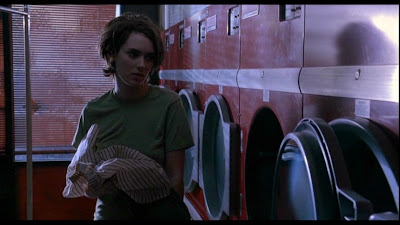
Reality Bites also features one of my favorite performances of Winona Ryder’s entire career. She had just come off making several period piece films and was clearly looking to do something contemporary, something that spoke to her generation. She used her star power to pluck an unknown screenwriter out of obscurity and, with the help of Ethan Hawke, got the film made where it would normally have languished in development hell for years. However, Reality Bites was seen as and marketed as a Gen-X film and its supposed target audience wasn’t interested in seeing their lives and interests writ large in a mainstream commercial film. It underperformed at the box office but has since gone on to develop a sizable following. I don’t want to say cult following because it isn’t that kind of film but it does have its fans.

Reality Bites is about four college graduates dealing with life after school as they try to figure out what they want to do with the rest of their lives. Vickie (Janeane Garofalo) works as store manager at a local Gap. Sammy (Steve Zahn) is trying to figure out a way to tell his conservative mother that he’s gay. Troy (Ethan Hawke) is a struggling musician. Lelaina (Winona Ryder) aspires to be a filmmaker and chronicles the ups and downs of her three friends for a documentary about her generation.

Lelaina, like her friends, is a child of divorce and her parents (Swoosie Kurtz and Joe Don Baker) want her to get a regular 9-to-5 job so that she can become a productive member of society. To pay the bills, she works as an assistant/gofer for a morning television talk show called Good Morning Grant! where she caters to the whims of its obnoxious host (played with two-faced gusto by John Mahoney). She’s roommates with Vickie and their friendship is summed up rather nicely in a scene where we see them singing along to Squeeze’s “Tempted” in Lelaina’s car. Who hasn’t done that with their friend(s) at some point in their lives? I don’t mean necessarily to that song but to music in general.

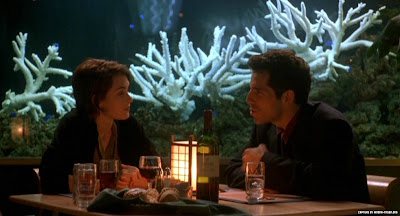
One day she literally runs into Michael Grates (Ben Stiller), an executive at MTV wannabe, In Your Face TV, when they get into a minor car accident. She finds herself attracted to his inability to articulate a sentence much less a thought and he’s drawn to her nervous, awkward energy. It’s baffling what they see in each other but they’re both young and attractive and start dating. However, when Troy is fired from his day job, Vickie invites him to stay at their place (“Welcome to the maxi-pad.”) until he can find work, much to Lelaina’s chagrin (“That’s the American Dream of the ‘90s. That could take years!”). Me think she doth protest too much (“He will turn this place into a den of slack!”). See, Lelaina has a thing for Troy and he for her but they’re too busy getting on each other’s nerves in a meet-cute kinda way to do anything about it.

Lelaina’s first date with Michael has to be one of the most inarticulate ones ever put on film as they stammer their way through dinner. They each come up with some real gems to woo each other, like he tells her about how Frampton Comes Alive! changed his life while she explains why the Big Gulp is the most profound invention in her lifetime (?!). Maybe these two are really made for each other. As superficial as Lelaina comes across a lot of the time, Winona Ryder, with her adorable presence, keeps me interested and engaged. Away from Michael’s I.Q.-sucking black hole presence, Lelaina seems smarter.

When he’s not spending time pretending he can’t stand Lelaina, Troy writes awful, subpar Beck lyrics and quotes from Cool Hand Luke (1967). While he waits for her to realize that he loves her, he has sex with a succession of not-too bright groupies (one of them is a blink and you’ll miss her, Renee Zwelleger). Vickie also has a revolving door of sexual partners – so much so, that she gets an AIDS test and anxiously awaits the results – her character’s big dilemma that is resolved fairly quickly and a little too neatly.

Ben Stiller, in what was not only his first major acting gig but also his directorial debut, does a good job of portraying a guy who means well but is so clueless when it comes to things that really matter. He isn’t afraid to come off as an idiot while also hinting that underneath it all Michael does appear to have the best intentions, he just goes about articulating them in all the wrong ways. Troy, on the other hand, is mean-spirited and channels his jealously in vindictive ways, like when he pretends to tell Lelaina that he loves her. The hurt that registers on her face, especially in her eyes says it all, reminding one of how good a silent actress Ryder could have been if she had acted in another bygone era.

Ryder shows a capacity for comedy in a montage where Lelaina applies for a series of film and T.V.-related jobs featuring brief but amusing cameos by Andy Dick, Keith David, Anne Meara, and David Spade. Watching Ryder try to define irony under pressure always gives me a chuckle as does her interaction with Spade’s condescending burger jockey (“Ms. Pierce, there’s a reason I’ve been here six months.”). She was one of my earliest cinematic crushes and I know I shouldn’t like this film but dammit, she’s in vintage adorable Manic Pixie Dream Girl mode – smart and gorgeous with a vulnerable quality that I find irresistible. Sorry Natalie Portman, Zooey Deschanel and you other Pixie Dream Girls, Ryder is the original – accept no substitutes!

Coming from the world of stand-up comedy, Janeane Garofalo gets some of the film’s funniest lines (“I think I was conceived on an acid trip.”) and delivers them effortlessly like she was born to play Vickie. She also interacts well with Ryder and an even more interesting film would’ve been one where Vickie’s friendship with Lelaina was the focus. Obviously, others thought she had something special and for a brief while, Garofalo flirted with a mainstream film career with The Truth About Cats and Dogs (1996) and The MatchMaker (1997). Out of the four friends the one that suffers most in terms of screen time is Sammy. It often feels like his storyline was reduced so that more time could be devoted to the Michael-Lelaina-Troy love triangle. It’s a shame because Steve Zahn is such a gifted comedic actor with excellent timing and he’s given little to do in Reality Bites.

If I sound a little too harsh on Reality Bites, I don’t mean to be. The film does nail what it’s like to sit around with your friends, get high and comment ironically on old 1970s sitcoms. There is a fun bit where our four friends go out to get junk food and dance spontaneously to “My Sharona” by the Knack. It’s nice to see the normally reserved Ryder cut loose and act goofy. The film’s best scenes are the ones where all four friends are interacting with each other, bantering back and forth in a way that feels authentic and has a relaxed air that only comes from people who have known each other for some time.

In 1991, the producer of The Big Chill (1983), Michael Shamberg wanted to make a like-minded film for people in their twenties. He read Helen Childress’ Blue Bayou, a writing sample from the 23-year-old University of Southern California film school graduate. He liked it and wanted her sample to be the basis for his project. She met with him and told him about her life and friends and their struggle to find work during the recession that had hit the United States at the time. She had used her friends, their personalities and some of their experiences as the basis for her script. Shamberg, along with co-producer Stacy Sher, saw the pilot for The Ben Stiller Show and approached him to direct not act. At the time, Sher and Childress were developing the screenplay and had Lelaina and Troy figured out but couldn’t quite come up a credible character to complete the love triangle.

In February 1992, Shamberg sent Ben Stiller a copy of Childress’ script while he was editing the pilot for a show on Fox. He soon signed on to direct and worked with Childress for nine to ten months, developing her script. He suggested that he could play the third person in the love triangle. Over time, the Michael Grates character changed from a 35-year-old advertising man attempting to market Japanese candy bars in America to a twentysomething executive at a music video T.V. station. Childress and Stiller also changed the structure of the film, with the focus changing to the relationship between Lelaina and Troy while the stories about Vickie and Sammy, which were originally more fleshed out, were scaled back.

Childress and Stiller had a script that could be filmed by December 1992 and began shopping it around to various Hollywood studios all of whom turned it down because it tried to capture the Generation X market much like Singles had attempted to and failed. They finally got TriStar interested and began developing it there. The studio soon put it in turnaround. Childress, Sher and Stiller managed to convince the Film Commission of Texas to fund a location scouting trip to Houston despite no studio backing, no budget and no cast. As they arrived in the city, they got a call and learned that Winona Ryder had read Childress’ script. She wanted to do it and Universal Pictures agreed to finance the film. Coincidentally, Childress had Ryder in mind when she wrote the character of Lelaina.

The previous three films Ryder had made were period pieces and she needed a break. She wanted to do “something about people my age and in my generation growing up in today’s society.” She read Childress’ script while making The House of Spirits (1993) and it made her laugh: “It was very familiar to me – the way they talk, the attitude they have towards each other, the places they go. These were things I could relate to.” It was exactly the change of pace she wanted. At the time, Ethan Hawke’s career was in a rut after the buzz from Dead Poets Society (1989) had subsided. Up to that point, he had been known mostly for playing clean-cut characters and so the role of Troy would be something of a departure for him. Ryder was a fan of Hawke’s work and stipulated in her contract that he would co-star opposite her.

Stiller met Steve Zahn through Hawke as they were doing a play together at the time and was impressed by how funny he was. Zahn borrowed some money from his agent and went to Los Angeles to test for the film. He responded strongly to portraying a gay character coming out of the closet. Janeane Garofalo knew Stiller through their work together on his show and the producers felt that her style of comedy was perfect for the role of Vickie. According Garofalo, it came down to her, Parker Posey, Anne Heche and Gwyneth Paltrow. The studio loved and wanted Paltrow but Ryder liked Garofalo and had developed an instant connection with her.

The film received largely positive reviews among mainstream critics. In her review for The New York Times, Caryn James wrote, "Like the generation it presents so appealingly, it doesn't see any point in getting all bent out of shape and overambitious. But it knows how to hang out and have a great time." The Washington Post’s Desson Howe wrote, "By aiming specifically – and accurately – at characters in their twenties, debuting screenwriter Helen Childress and first-time director Stiller achieve something even greater: they encapsulate an era." Time magazine's Richard Schickel wrote, "The movie bobs along on this stream of funny offhandedness, never losing its balance. If it's 10 o'clock, and you want to know where your supposedly grownup children are, this is a good place to look for them.” Entertainment Weekly gave the film an “A” rating and Owen Gleiberman praised Ryder’s performance: “And Ryder, good as she was in The Age of Innocence, gives her first true star performance here. Beneath her crisp, postfeminist manner, Lelaina is bristling with confusion, and Ryder lets you read every crosscurrent of temptation and anxiety, the way her tentative search for love slowly grows into a restless hunger.” However, Roger Ebert gave the film two out of four stars and wrote, “What strange force locks filmmakers into clichés and conventions? What unwritten law prevented the makers of Reality Bites from observing that their heroine can't shoot video worth a damn, that their hero is a jerk, and that their villain is the most interesting person in the movie?”

Reality Bites grossed $18.3 million in six weeks. It underperformed at the box office because its target audience wasn’t interested in seeing their lives portrayed in a film by movie stars and stayed away as they did with other Gen-X films like With Honors (1994) and Threesome (1994). Universal’s vice president of marketing Bruce Feldman said at the time, “People liked the picture, but only a few went to see it.”

Ultimately, Reality Bites plays it too safe and veers dangerously close to being a feature-length sitcom by wrapping things up too conveniently. The characters often come across as superficial which tends to undercut the sincerity of the film’s message. Singles and the hilarious short-lived MTV sitcom, Austin Stories, were much more successful in documenting the trials and tribulations of Gen-X. And yet I’m oddly fascinated with Reality Bites, mostly because of Garofalo and Ryder. They play characters that deserve to be in a better film. I always thought that at the end of the film Lelaina should’ve dumped both guys and stayed single. I mean, look at her options: Michael is a clueless T.V. executive that listens to generic gangsta rap and Troy is a pretentious wannabe musician that screws around with her emotions. Hell, she should’ve hooked up with Vickie who is funny in wonderfully sarcastic way and digs ‘70s popular culture in a sincerely ironic way. Despite all of its flaws, I still enjoy watching Reality Bites when I just want to turn off my brain and let a film wash over me – junk food for the mind. Films like that have their place, too.


SOURCES


Bernstein, Jonathan. “Back to Reality.” The Face. July 1994.

Howe, Desson. “Ben Stiller Ignores the Generation Flap.” Washington Post. February 20, 1994.

Kolson, Ann. “In the Family Tradition.” Philadelphia Inquirer. February 20, 1994.

McInnis, Kathleen. "Ben Stiller Bytes." MovieMaker. March 1, 1994.

Reality Bites: Retrospective” featurette. Director Alan Griswold. Reality Bites: 20th Anniversary Edition DVD. Universal Pictures. 2003.

Rickey, Carrie. “Generation X Turns Its Back.” Philadelphia Inquirer. April 3, 1994.